Building a 0-to-1 B2B Term Deposit Investment Platform
Bank of Chile is the country's largest financial institution, with a nationwide network of branches, ATMs and digital services. Term Deposits is the Bank's product for investing idle funds for a fixed term at a fixed rate. Retail customers could already invest online; corporate clients could not.
As the Senior UX Consultant, I owned the design end to end, from discovery to the shipped solution, acting largely as product owner alongside a technically focused Product Manager. A two-week brief with no requirements became a three-month rebuild and the Bank's first digital B2B investment channel.
Corporate clients had no digital way to invest in term deposits. Leadership planned to copy the retail version, and the brief was “a B2B version in two weeks”, with no requirements, strict regulation and a fragile legacy backend.
›
2Approach
I brought the lead stakeholder into live co-design and shadowed the executive team to ground the brief in how B2B deals actually work. I worked with engineering so the design fit what the backend could carry.
›
3Result
The B2B channel launched and was adopted by corporate clients, with compliant multi-role approval workflows. Senior management congratulated the team on the result.
0→1the Bank's first digital B2B investment channel
3months, from an undefined two-week brief
Adoptedin production by corporate clients after launch
Project details Role · Scope · Team · Core challenge · Skills
Role
Senior UX Consultant. At the Bank, UX consultants owned the whole process, so I acted largely as product owner: from discovery and stakeholder alignment to the final solution, supported by a technically focused Product Manager.
Scope
Term Deposits for corporate clients: a completely new B2B digital channel, designed from zero. The existing retail version was the only internal reference.
Leadership expected a copy of the retail version, in two weeks.
Retail customers could already invest in term deposits online, although that version struggled to compete: few options and interest rates limited by the Bank's own constraints. Corporate clients had no digital option at all. Every deposit was negotiated by phone with a bank executive, a system that built relationships but looked outdated next to competitors already offering modern tools.
The idea
Leadership's first idea was to copy the retail version, which seemed the fastest way to give corporate clients a digital channel.
Copy retail · 2 weeks
The brief, and what followed
The brief was "a B2B version in two weeks", with no requirements behind it. Once development confirmed that B2B needed far more than a copy, that gap created real friction.
Build B2B from zero · 3 months
Week 02 weeks3 months
Section 2 · Alignment
Stakeholder Alignment: Turning a Vision into Requirements
Through live co-design, the lead stakeholder and I mapped the full lifecycle and agreed on user stories together.
The lead senior stakeholder possessed a strong strategic vision but lacked the product vocabulary to articulate it into requirements.
Rather than guessing and interpreting secondhand, I brought him directly into the design process. Sitting side-by-side, we mapped the entire lifecycle, locking in user stories and core interactions together.
Co-designMapping the full lifecycle side by side with the lead stakeholder, so user stories were agreed in the room, not interpreted afterwards.
Section 3 · Discovery
Shadowing the Executive Floor
An ethnographic study of the executive team: a full day observing how B2B deals were actually brokered.
To close the gaps in the undefined brief, I spent a full day of ethnographic observation with the Term Deposits executive team, watching how B2B deals were actually brokered.
The Currency is Trust — Executives closed high-value deals by phone on trust built by years of personal relationships, by customizing rates and terms per client to outsmart the competition.
Automation is Not Enough — Businesses lacked digital monitoring, but they were comfortable enough with the status quo that a purely automated self-service tool wouldn't win them over.
What the Benchmark Showed
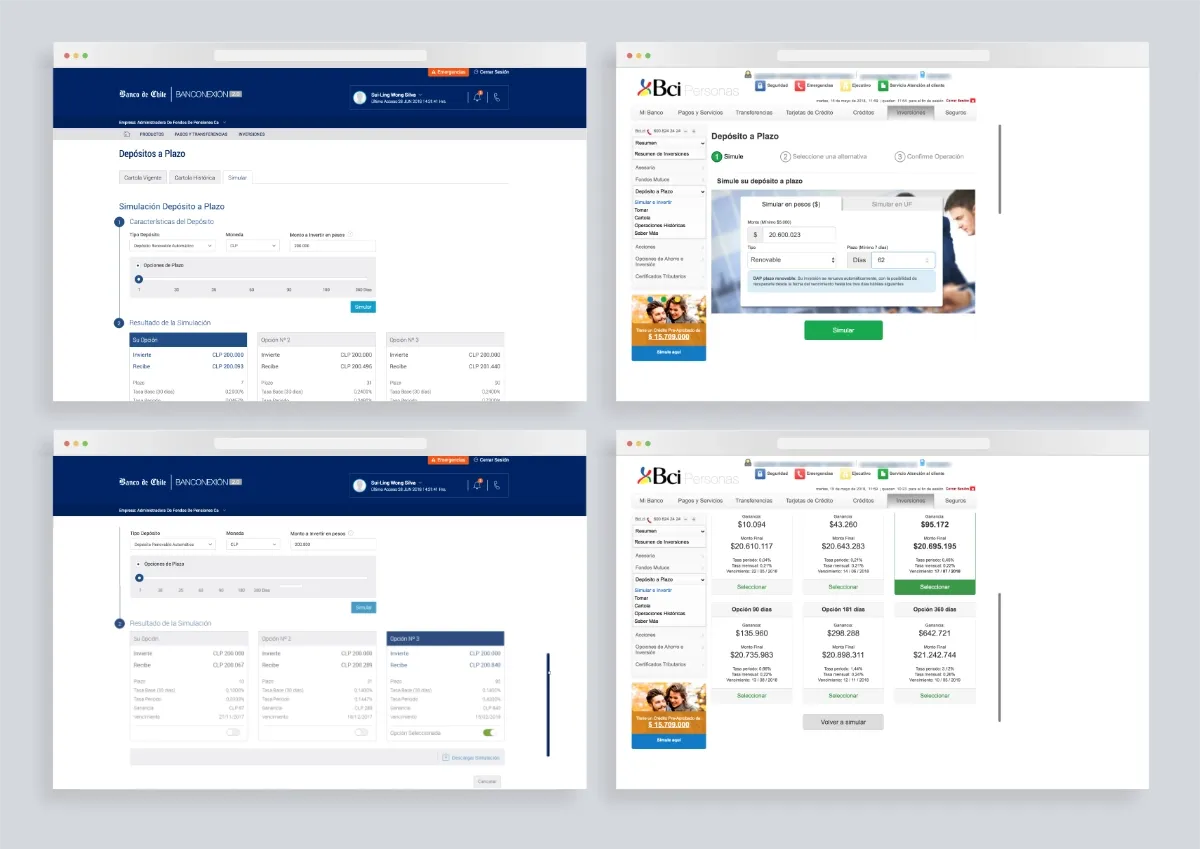
In the financial sector, a refined UI can't outweigh a better return on investment. Competitors were gaining ground with more attractive interest rates and real-time simulation, and some already had established B2B workflows.
BenchmarkOur only internal reference was the Bank's own retail version, so that is what we benchmarked against other banks. Competitors led on interest rates and real-time simulation, and already had B2B workflows we lacked.
Section 4 · Wireframes
Designing the End-to-End B2B Flow
Sketching flows live with the PM and stakeholder, we moved quickly to wireframes for the new B2B channel.
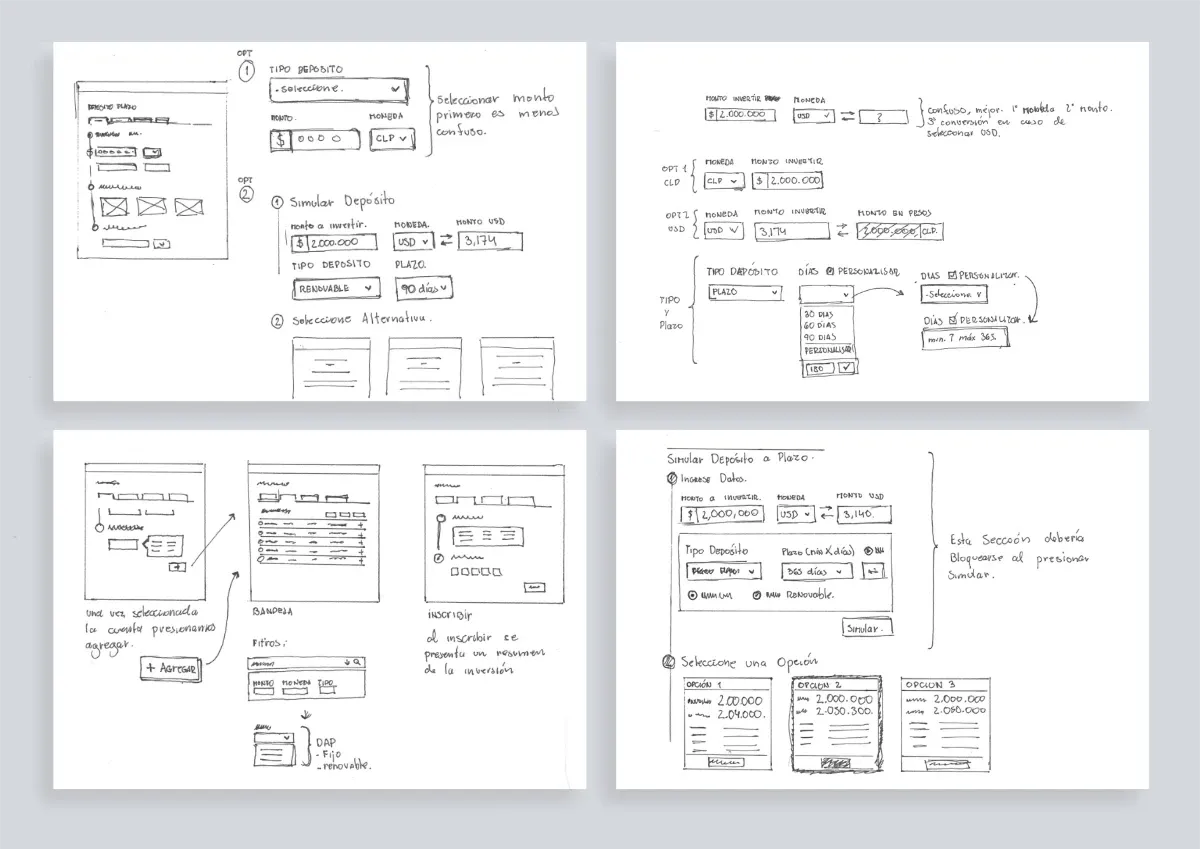
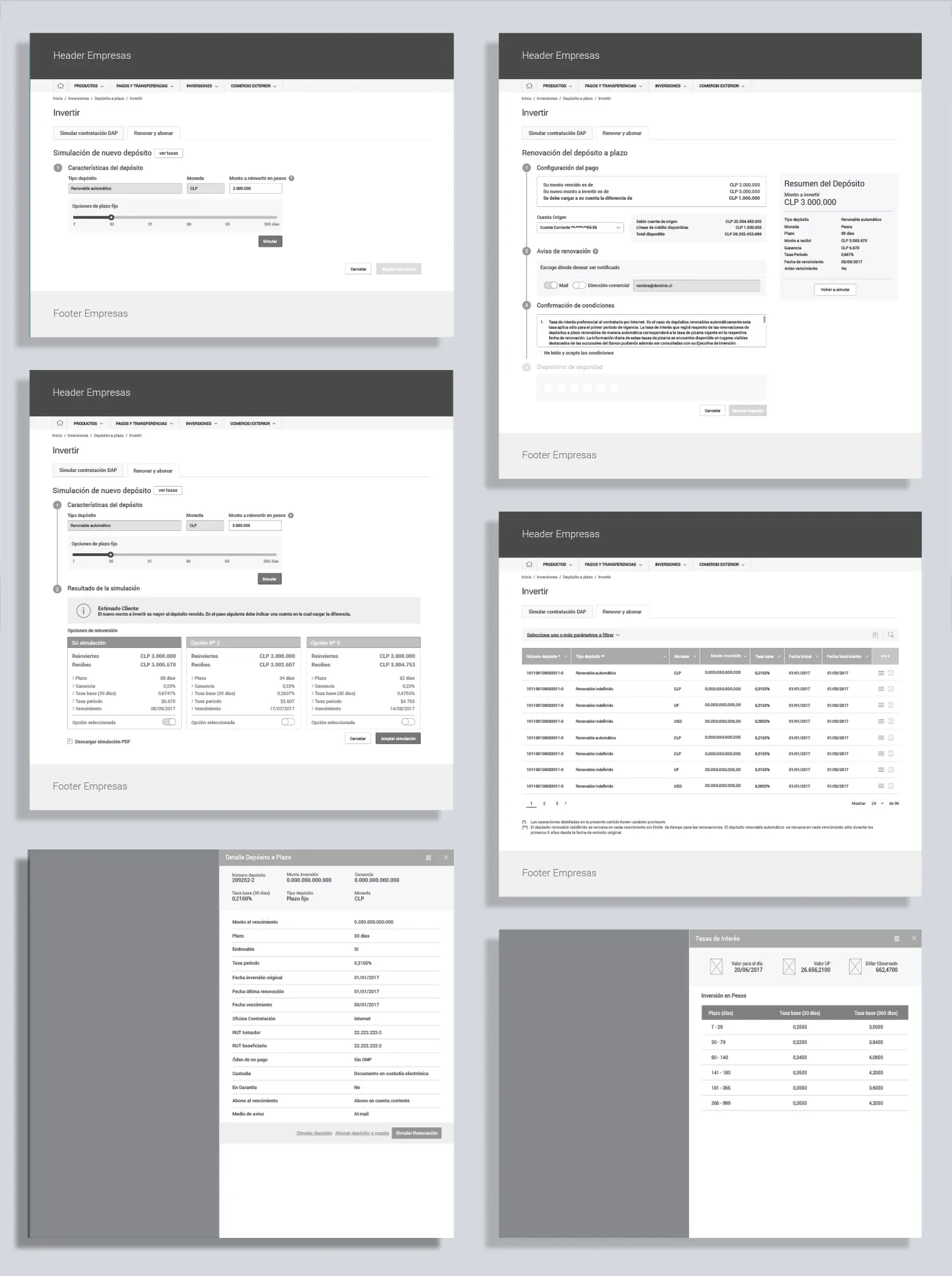
Guided by our baseline research, I brought the PM and stakeholder back into the room to co-design the solution. By sketching flows together live, we locked in requirements and moved rapidly into medium-fidelity wireframes to establish the new B2B channel.
SketchesHand-sketched flows for the new B2B channel, drawn live with the PM and stakeholder.
What we built
Digital feature parity, built for how B2B clients invest.
01Investment type
02Live currency conversion
03Duration
04Simulation
05Role-based approval
06Funding & release
Investment type
Live currency conversion
Duration
Simulation
Role-based approval
Funding & release
3
Architecture constraintThree options, not nineMatching every competitor would have overloaded the legacy system, and research showed more choice only crowded investors. We designed for the system we had.
Our strategy was digital feature parity. By removing the UX bottlenecks first, we made sure the Bank could compete as soon as interest rates adjusted.
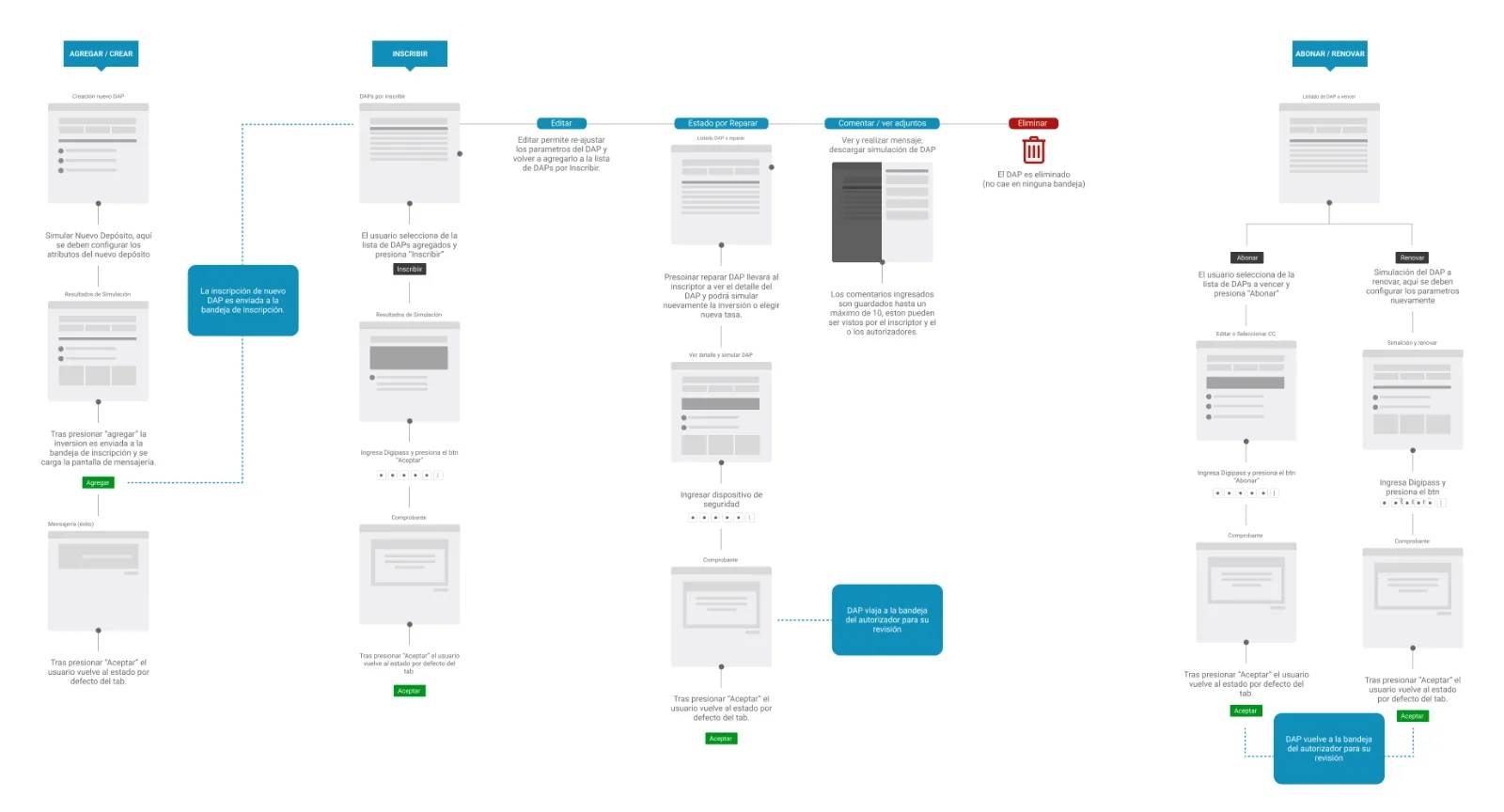
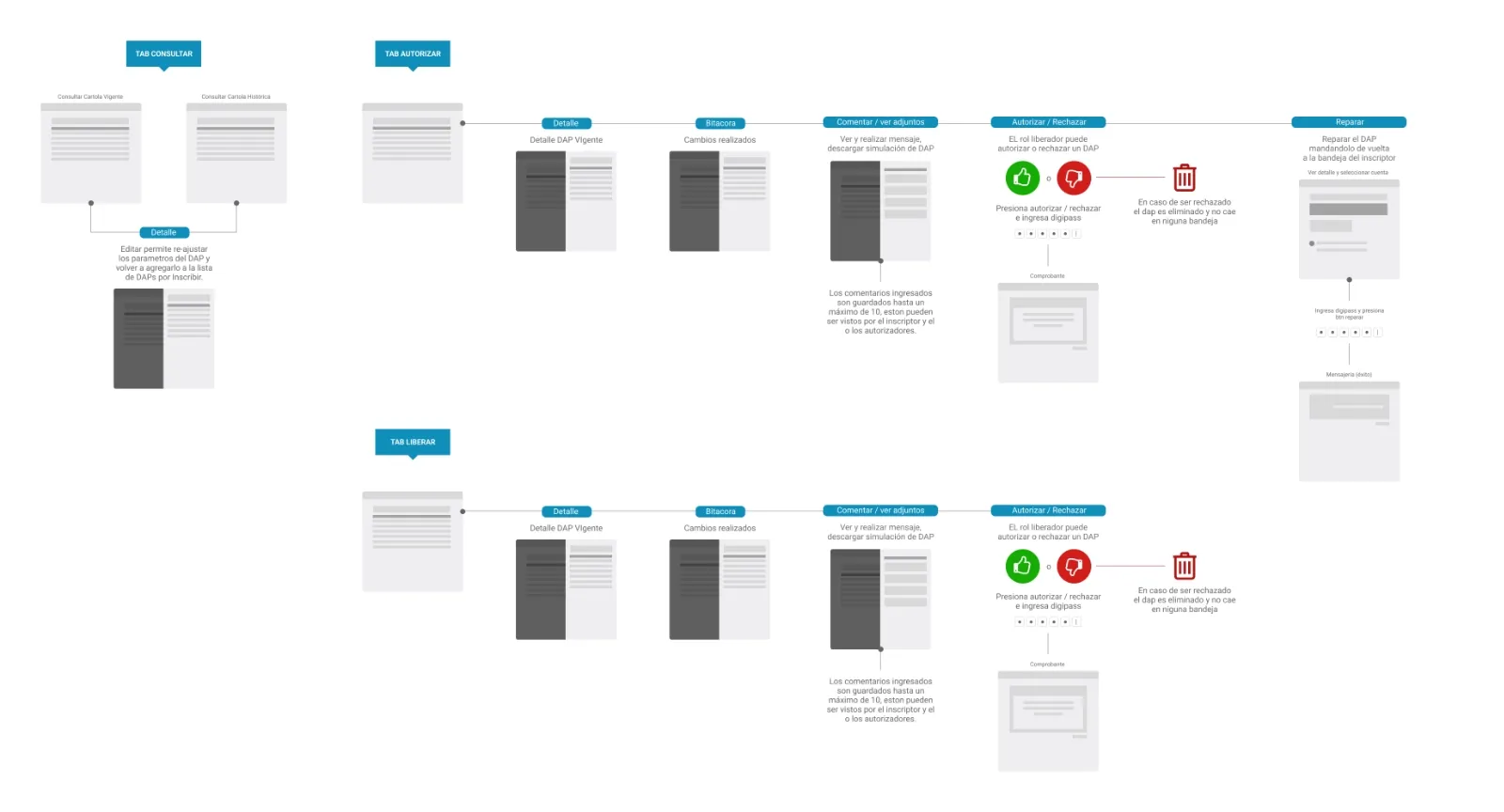
WireframesMedium-fidelity wireframes of the end-to-end B2B investment flow.
Section 5 · Compliance
Role-Gated by Design: Investing Under Regulation
Strict banking regulation shaped the interface: task-oriented, role-gated, and built for zero margin for error.
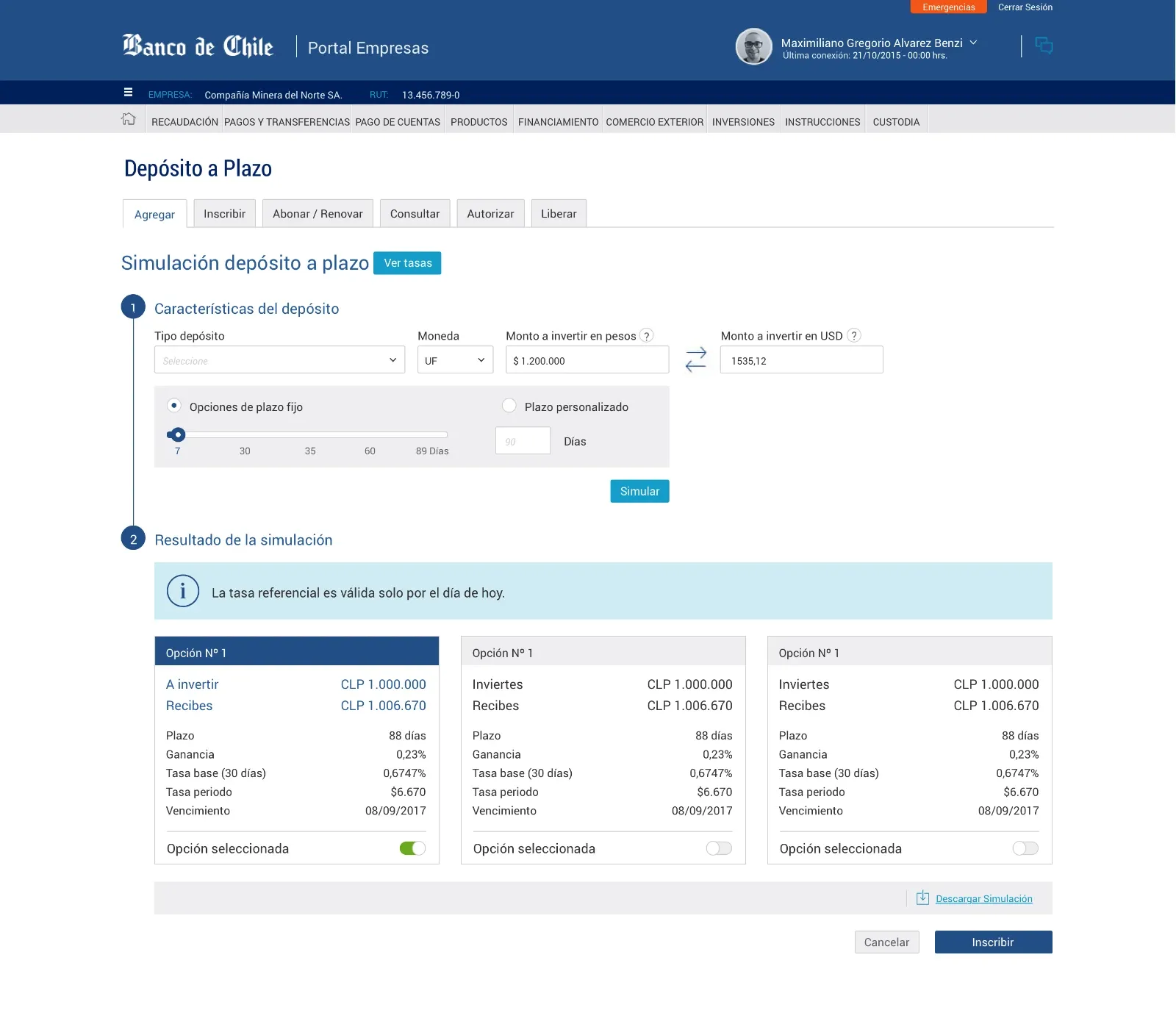
Banking regulation shaped the B2B interface from the start. I kept it task-oriented and predictable: standard components, familiar patterns and a clear hierarchy, so operators could make high-value decisions without second-guessing the screen.
SimulationCreating a term deposit: one simulation returns three offers. We found that large corporate clients often took these results to their bank executive to negotiate a better rate, so the digital channel became part of the relationship with their banker.
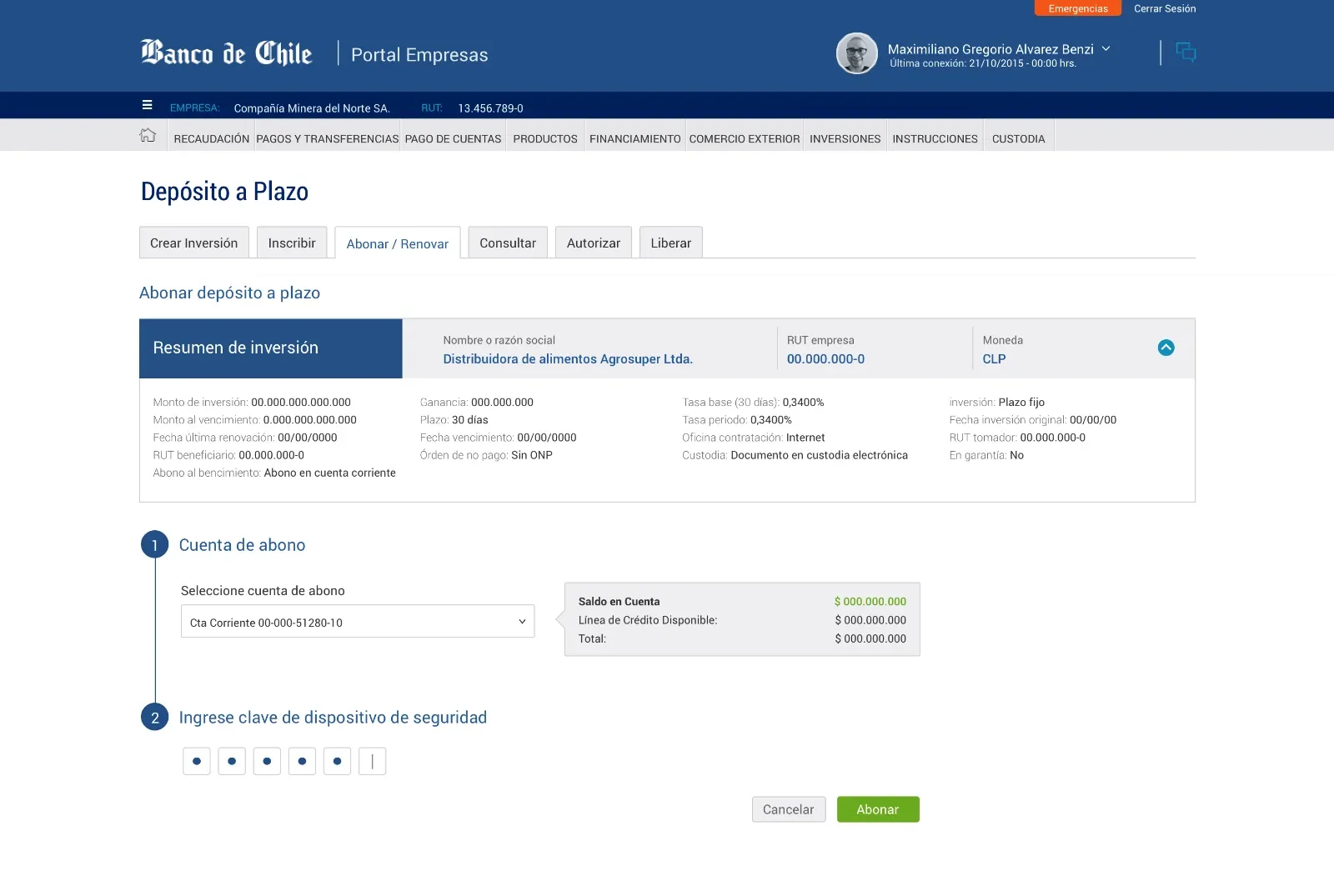
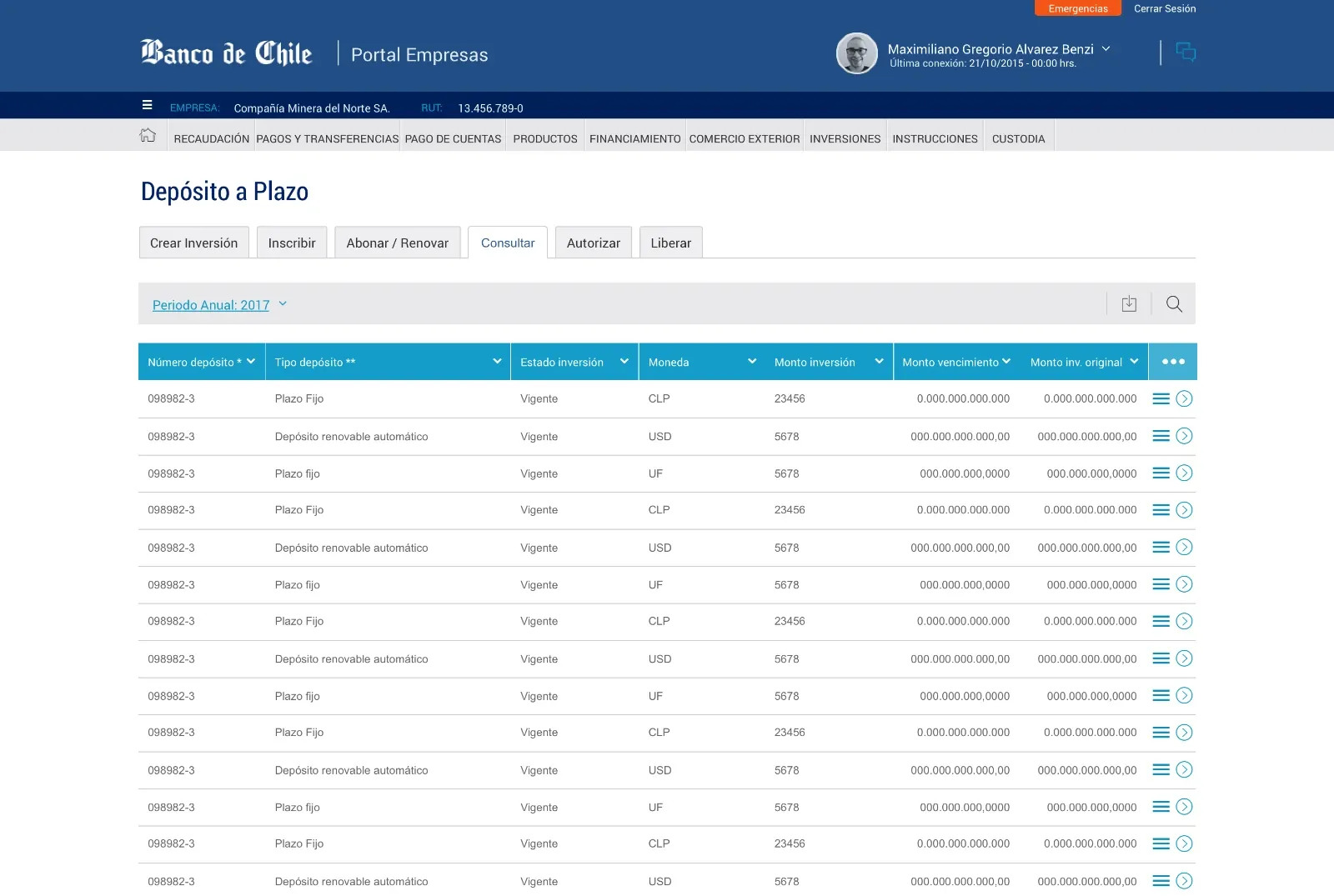
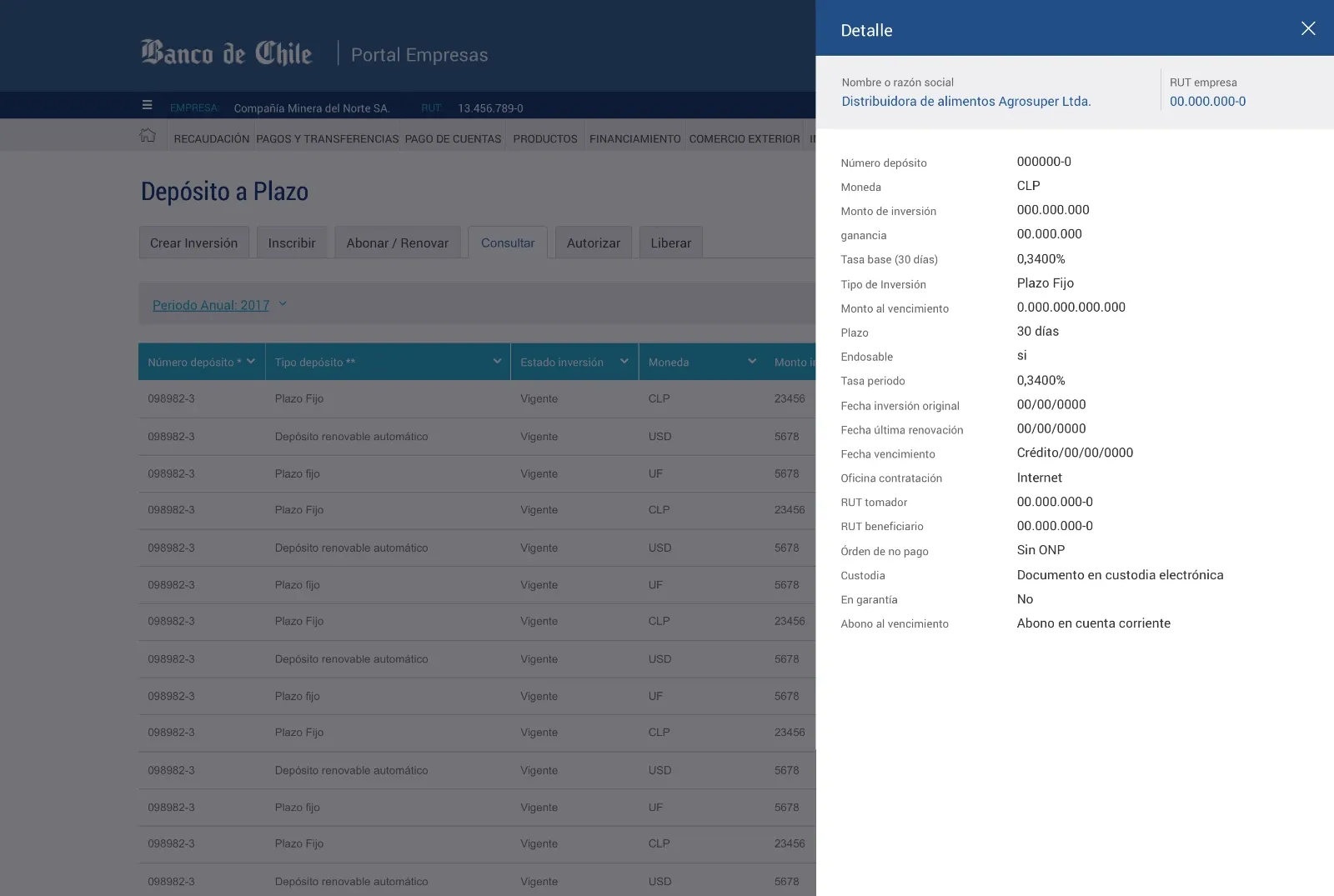
After subscribingIn order: subscribed deposits; linking a funding account, done by a user with the right role; the log of active deposits; and the deposit details. All data shown is placeholder content, because of NDA.
Governance & Risk Control
High-value investments required strict multi-role support for creating, approving, modifying, and deleting assets with zero margin for error.
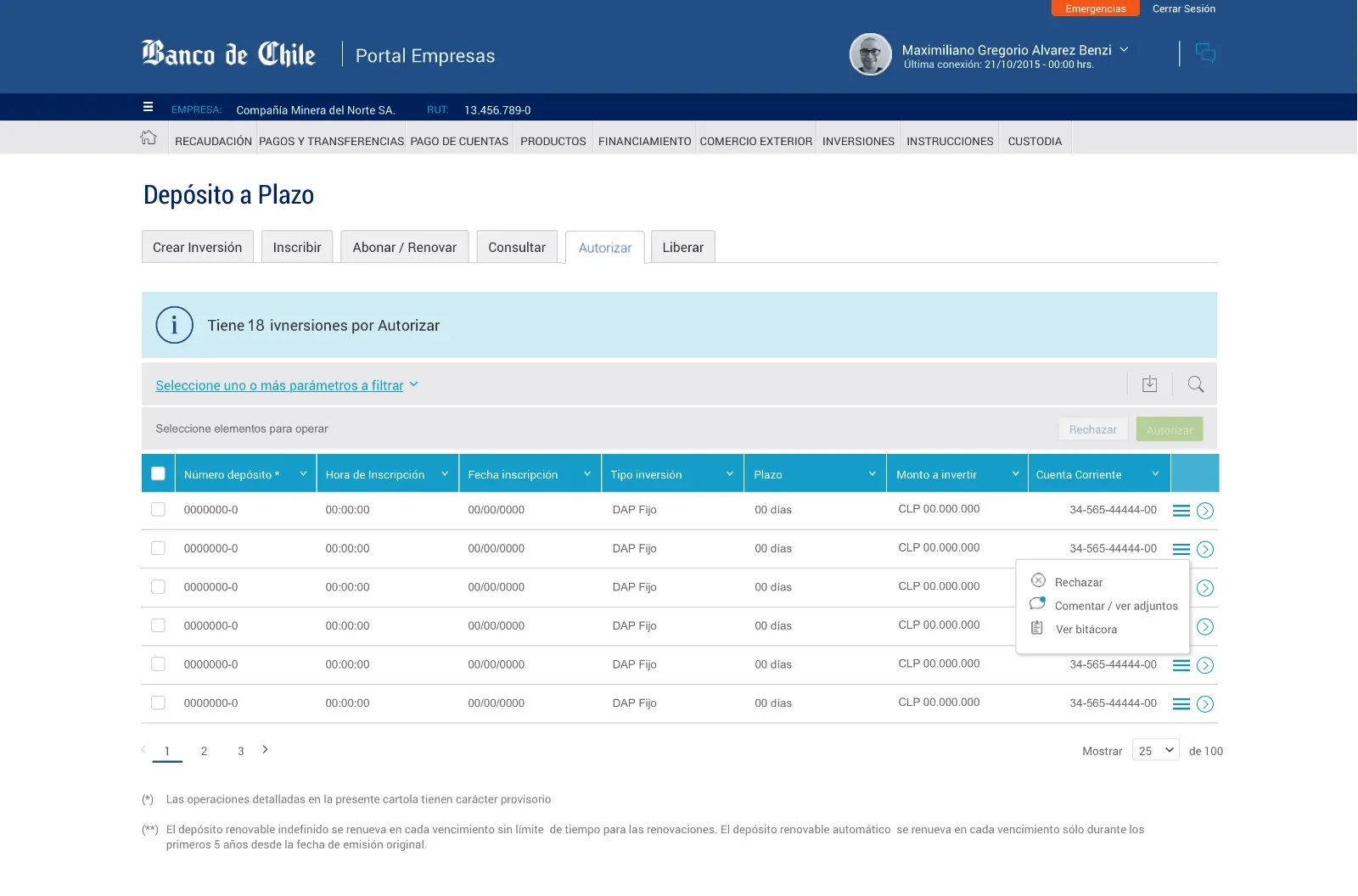
To handle this, we designed a compliant transaction lifecycle: every deposit simulation (valid for exactly one banking day) must move through a rigid, role-gated approval and release sequence.
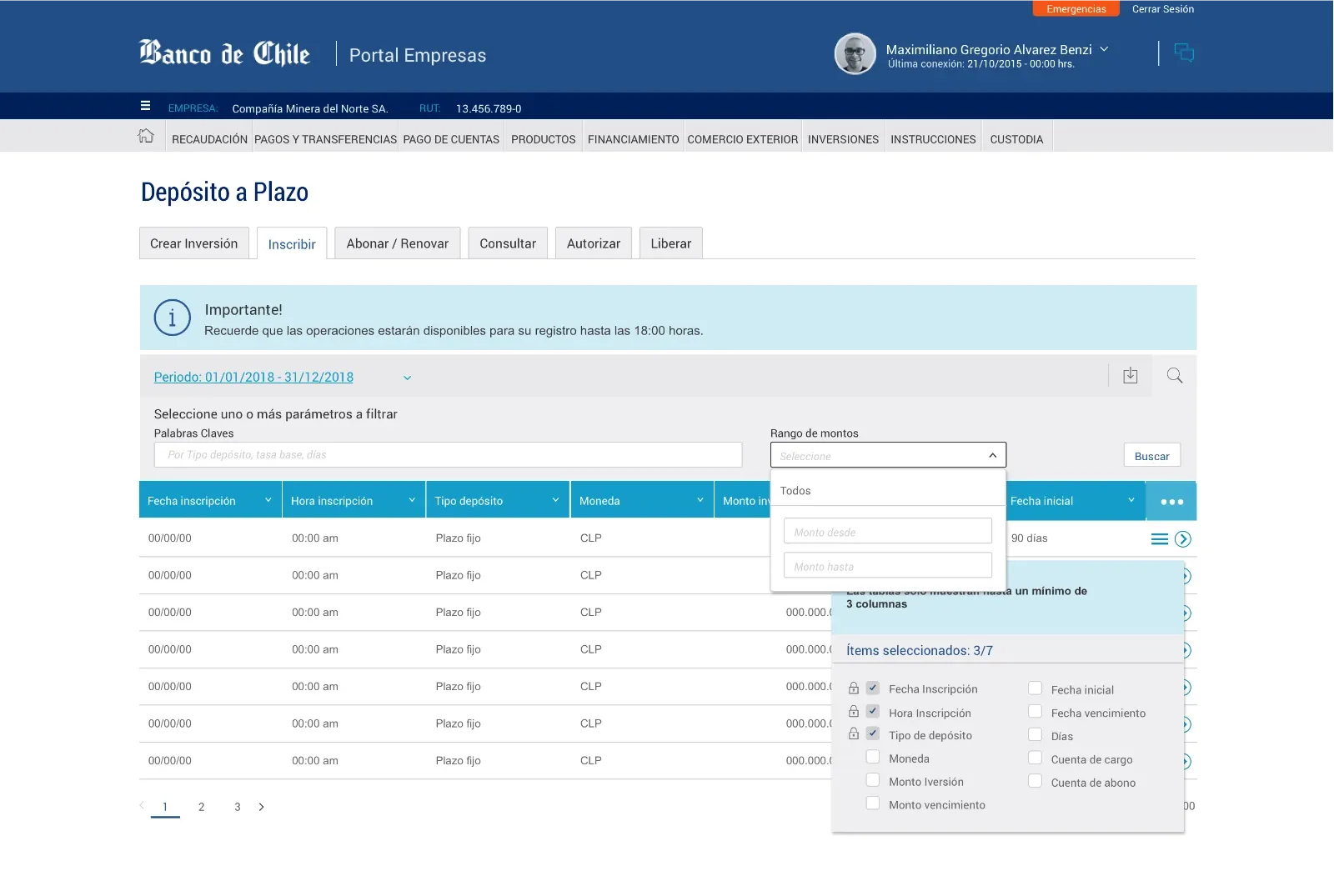
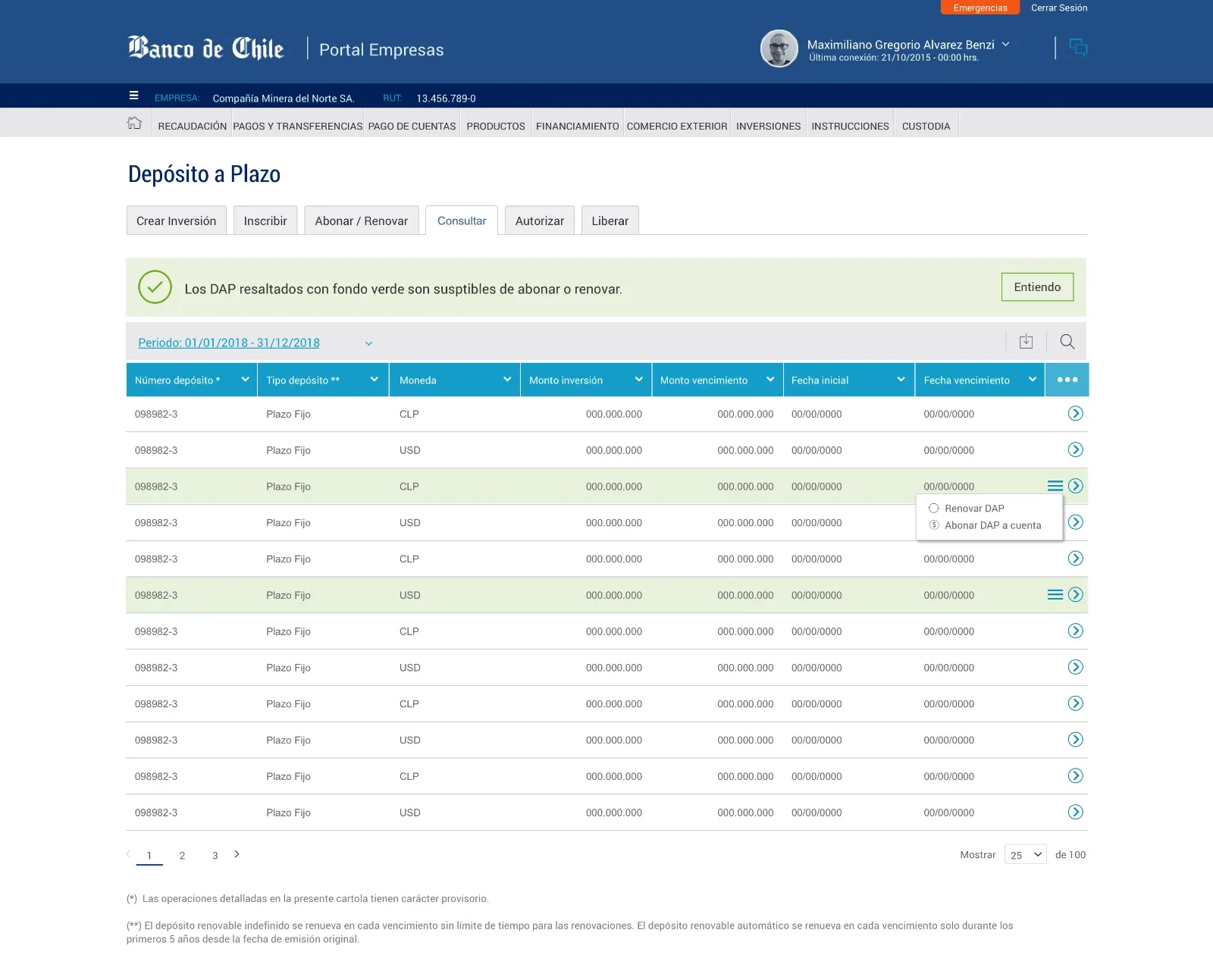
AuthorizationDeposits waiting for authorization. A user with the right role must authorize each one within one working day, either from the table or from the deposit details.
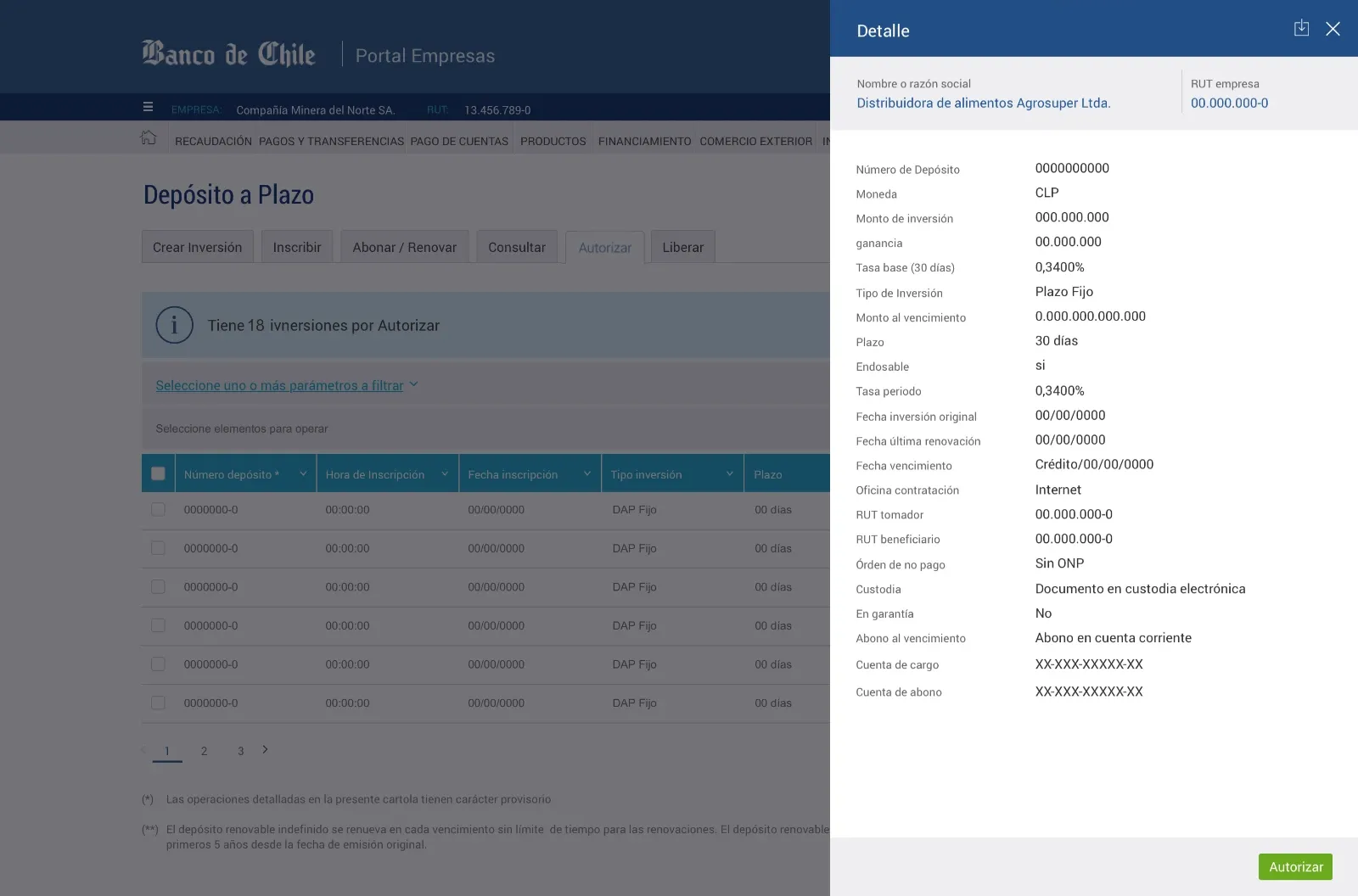
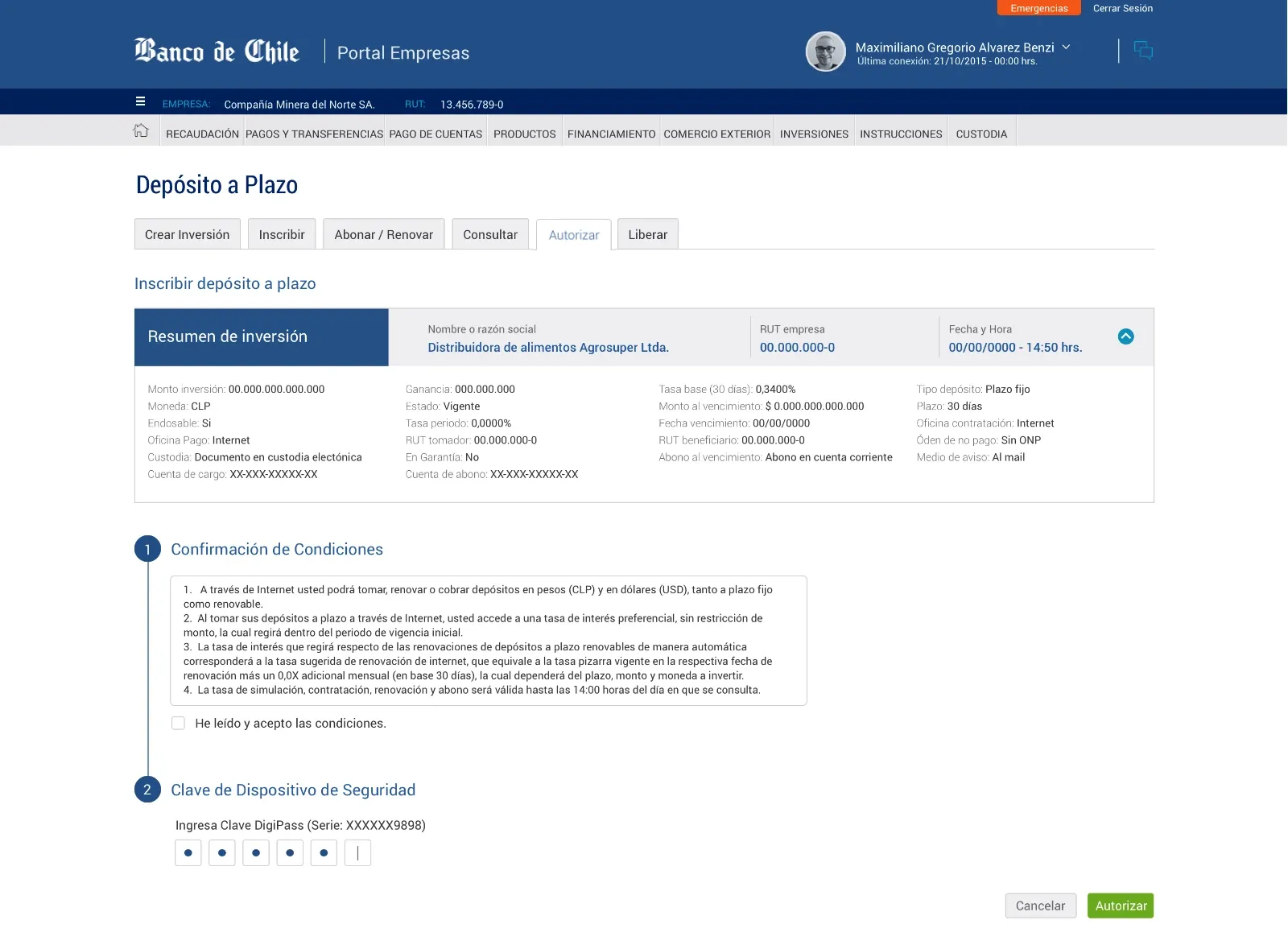
Authorize stepThe final step: full deposit details, terms and conditions, and the user's passkey. Data shown is placeholder content, because of NDA.
Section 6 · Data Density
Keeping Operators in the Dashboard
High-volume operators needed answers right where they were working.
To cut context-switching during high-volume portfolio management, I designed inline table filters and persistent side drawers. Corporate operators could filter complex transaction histories, audit approval trails, inspect deposit details and resolve discussions without leaving their main dashboard.
Section 7 · Legacy Limits
Designing Around a Fragile Backend
Real-time alerts would have crashed the backend, so we found a lighter way to warn users.
Not every idea survived the legacy backend. I first designed real-time alerts for expiring deposits, but engineering stress tests showed the backend would crash under the query load, so we worked out a lighter alternative together.
Expiration flagA simpler warning than the real-time alerts I first designed. It was sustainable, and it shipped.
Section 8 · Impact
Business Impact & Outcomes
The Bank's first digital B2B investment channel, live and in use.
As in many large institutions, no post-launch metrics reached the delivery team. What came back was qualitative: corporate clients were using the new channel, and senior management congratulated the team on a job well done. The outcomes below are what was verifiable rather than what was measurable.
ImpactHow
✓
B2B market gap
First digital investment channel for corporate clients
Replaced a strictly manual, phone-based process for business clients, and was adopted after launch
How
Designed the corporate deposit flow from zero, including real-time currency conversion and simulations
✓
Focused offer
What the Bank could deliver, done well
Reduced decision complexity for investors without cutting functionality that mattered
How
We couldn't match every competitor option, and research showed the extra options crowded users without adding much, so we built around the Bank's real offer
✓
Delivery under an undefined brief
From a two-week wish to a structured release
A product the team could build, with requirements everyone had agreed on
How
Brought the lead stakeholder directly into the design process to turn his vision into shared user stories and features
✓
Regulatory compliance
Every high-value transaction role-gated
Met the banking regulation requirements for high-value transactions, with no room for error
How
Designed multi-role approval workflows and a strict one-banking-day lifecycle for every simulation
✓
Engineering partnership
A sustainable alternative to real-time alerts
Shipped a crash-free expiration warning instead of a feature the backend couldn't carry
How
Replaced the real-time alert design with a lightweight expiration flag, agreed with engineering
Reflection
Learnings & Reflections
What a regulated, undefined brief taught me.
01
Bring domain experts into the room.
Inviting the people who know the business directly into the design process saves weeks of guesswork that a formal research phase alone could never recover.
02
Familiar beats novel in regulated products.
The "complicated" interactions users already know are often worth more than a sleeker, unfamiliar pattern. In regulated enterprise environments, UX is about finding the best possible solution within the box.
03
Design for the relationship, not around it.
The best digital channel for corporate investors didn't replace their banker. It supported a relationship built on years of trust.