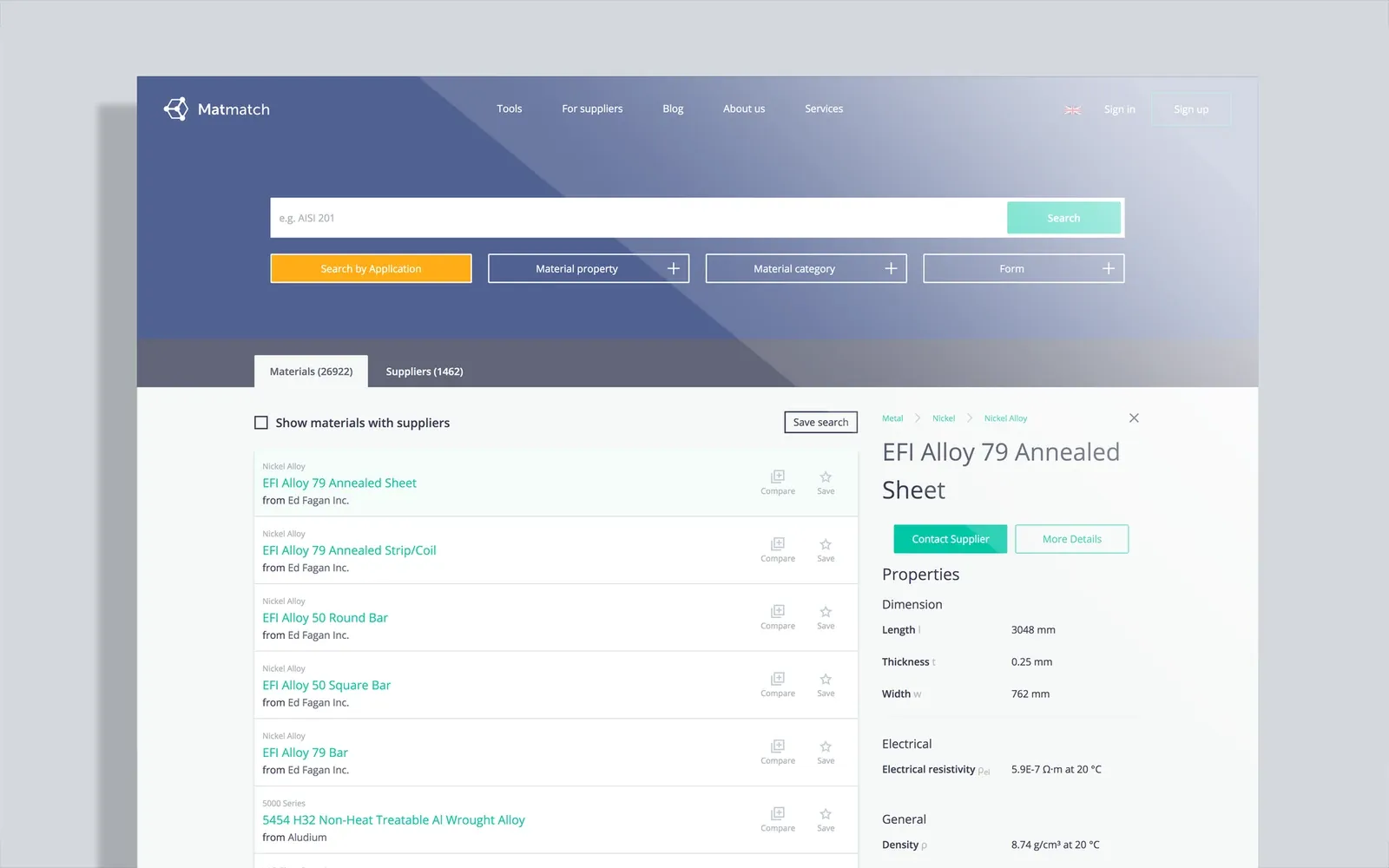
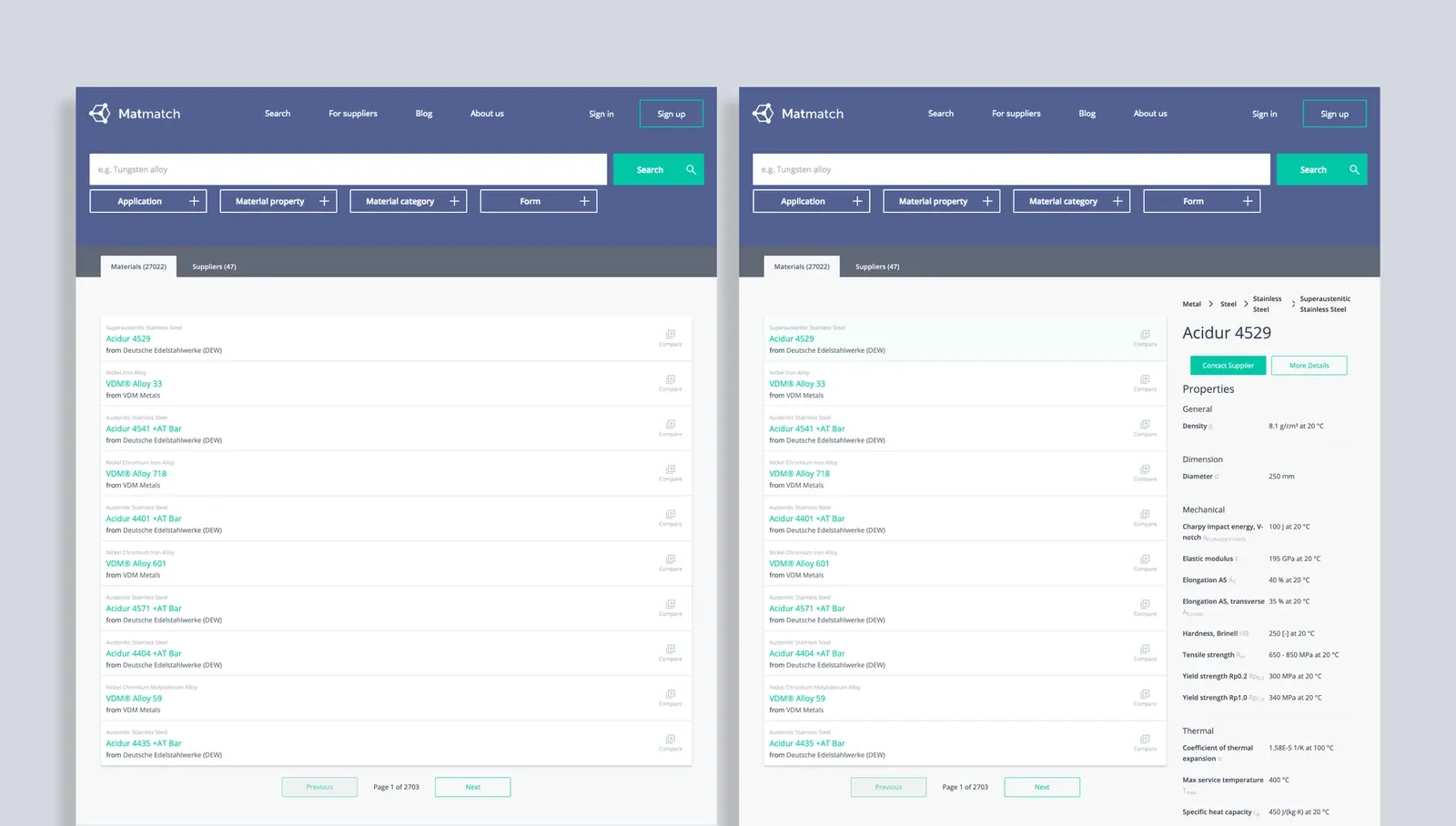
Matmatch is a materials data platform that helps product designers and engineers find, evaluate, and source materials by connecting them with the right suppliers in the construction industry. The world's largest free materials database.
This case shows what happens when good design work runs into the wrong strategy — and what changes when that finally shifts. For more than a year, I improved a platform the market was not asking for. When management accepted that the value proposition itself had to change, we had roughly twelve months to prove a new direction. It is a case about evidence as a tool of persuasion, and about how to make an organization ready to hear what its users are saying.
Case Metadata
Role
Senior Product & UX Designer (co-owning product direction with the Product Manager)
Scope
B2B/B2C materials data platform — value proposition, search experience, design system, and product process
Timeframe
September 2018 – June 2021
Team
Product Manager, data science engineers, marketing, sales, engineering
Core Challenge
A platform underserving its users and losing supplier confidence, inside a company that spent time improving the product rather than questioning the proposition
Skills & Core Competencies
Product Strategy & Value Proposition Design, Design Sprint Facilitation, Evidence-Based Stakeholder Persuasion, Design System Architecture, Cross-Functional Leadership, Continuous Discovery
1. A Platform the Market Wasn't Buying
Matmatch set out with an ambitious mission: to become the go-to platform for product designers and engineers to discover, evaluate, and source materials. But the platform was struggling to deliver on that vision.
The main problem: engineers found limited value in the experience — they could not reliably find relevant material data. Commercially, the consequences were direct: too few qualified leads for suppliers and growing pressure on renewals, threatening the platform's growth and long-term viability.
My Role: The company brought me on board because they needed someone capable of combining product ownership with UX expertise—blending strategic vision with practical execution and working side-by-side with the Product Manager. I shared responsibility for defining the product's direction: aligning priorities across engineering, sales, and marketing, and linking every user need to a business outcome.
2. A Strategy That Wasn't Working
My first months went to understanding the product, the users, and an unfamiliar industry. I focused on stabilizing the platform and laying the groundwork for major changes: reducing the maintenance burden by eliminating design debt and simplifying workflows.
Small, steady improvements restored trust in the product, but they could not fix the underlying problem. Engineers could not find what they needed, and the platform was not generating the qualified leads the business depended on.
Key insight: That gap did not close through incremental work. The product improved while the strategy stayed fixed. What eventually changed the situation was not a better argument. It was accumulated evidence and a business result that could no longer be explained away.
3. Facilitating Product Transformation
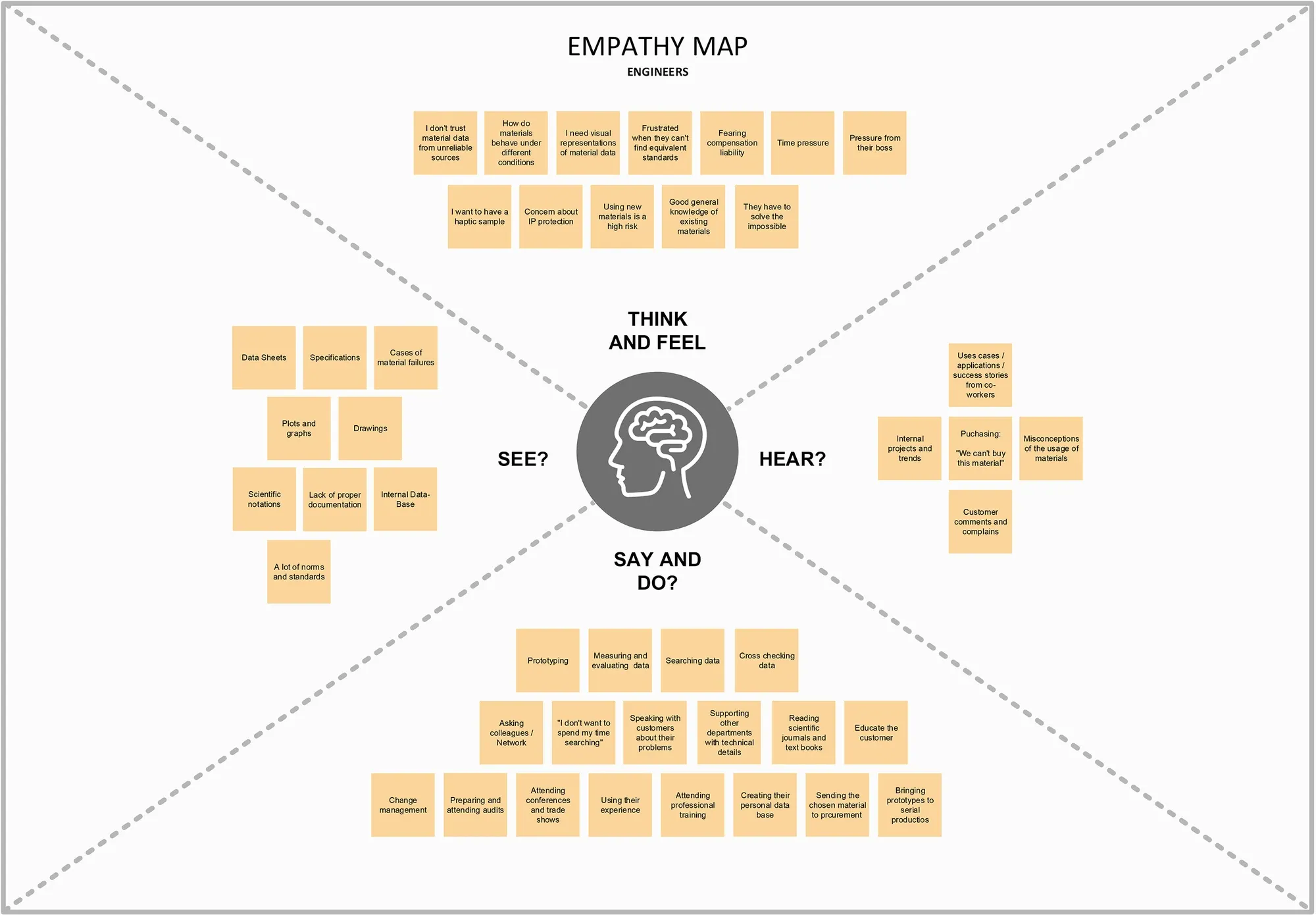
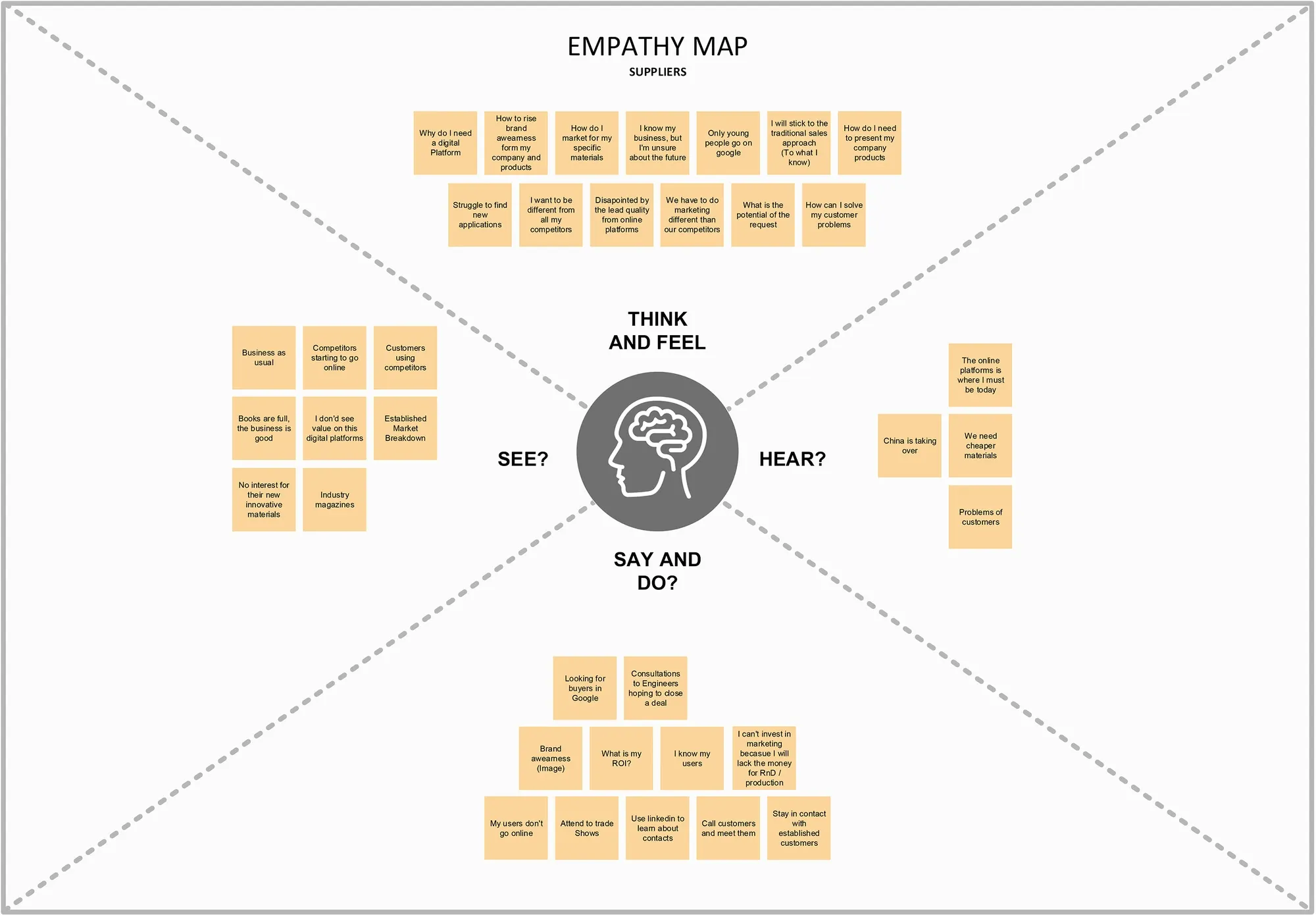
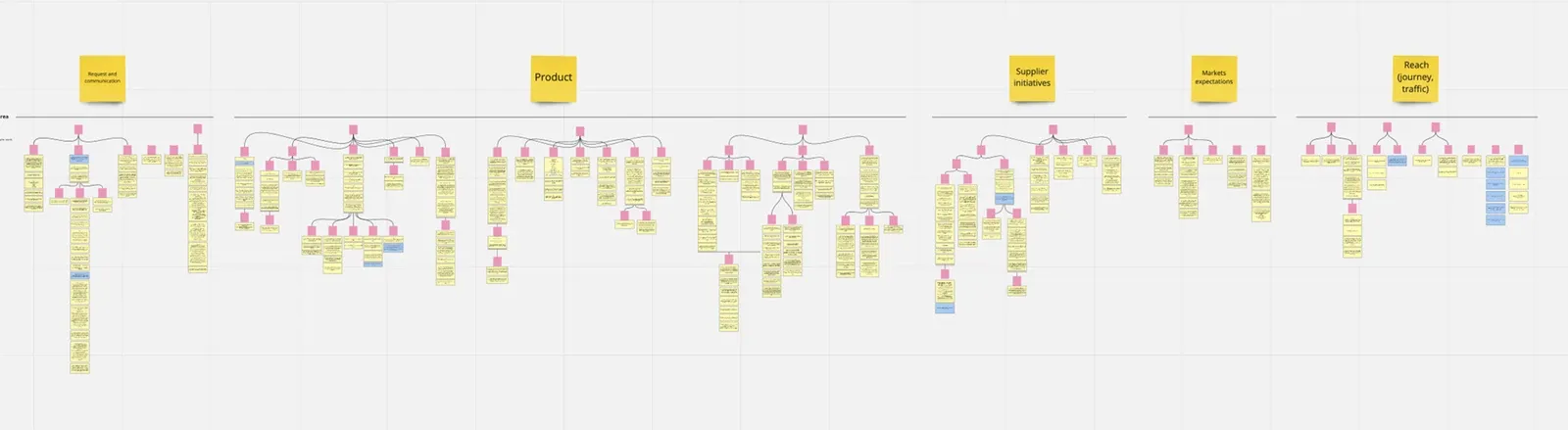
Tasked with a major platform pivot and a twelve-month deadline, our immediate priority was reducing organizational resistance by making user research directly visible to stakeholders. We assembled a cross-functional team across data science, marketing, and sales to redefine the product direction, introducing UX frameworks that built internal buy-in and established a user-first culture.
Empathy maps & data synthesis
Making user insights visible across the company, helping team members understand the user's mindset.
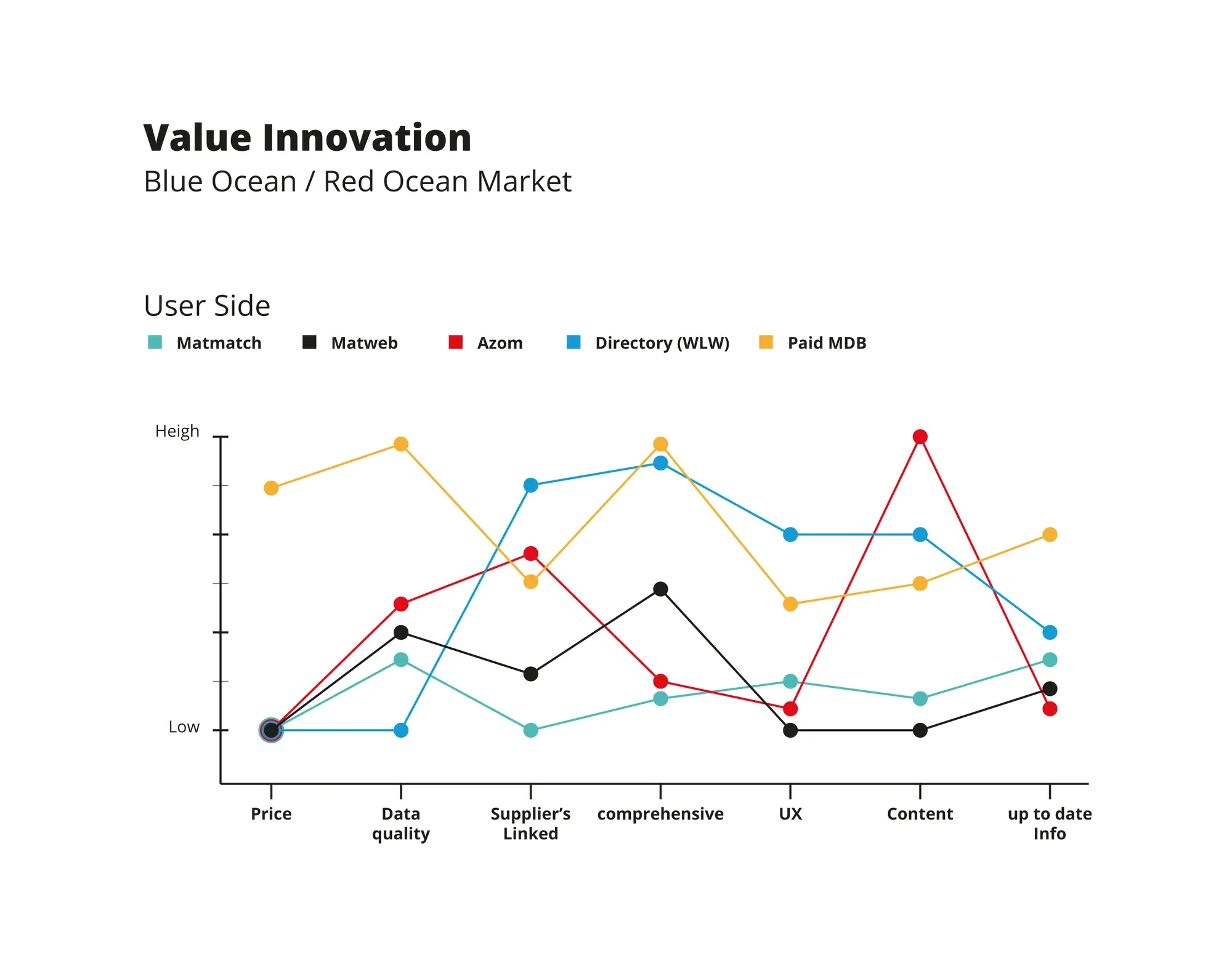
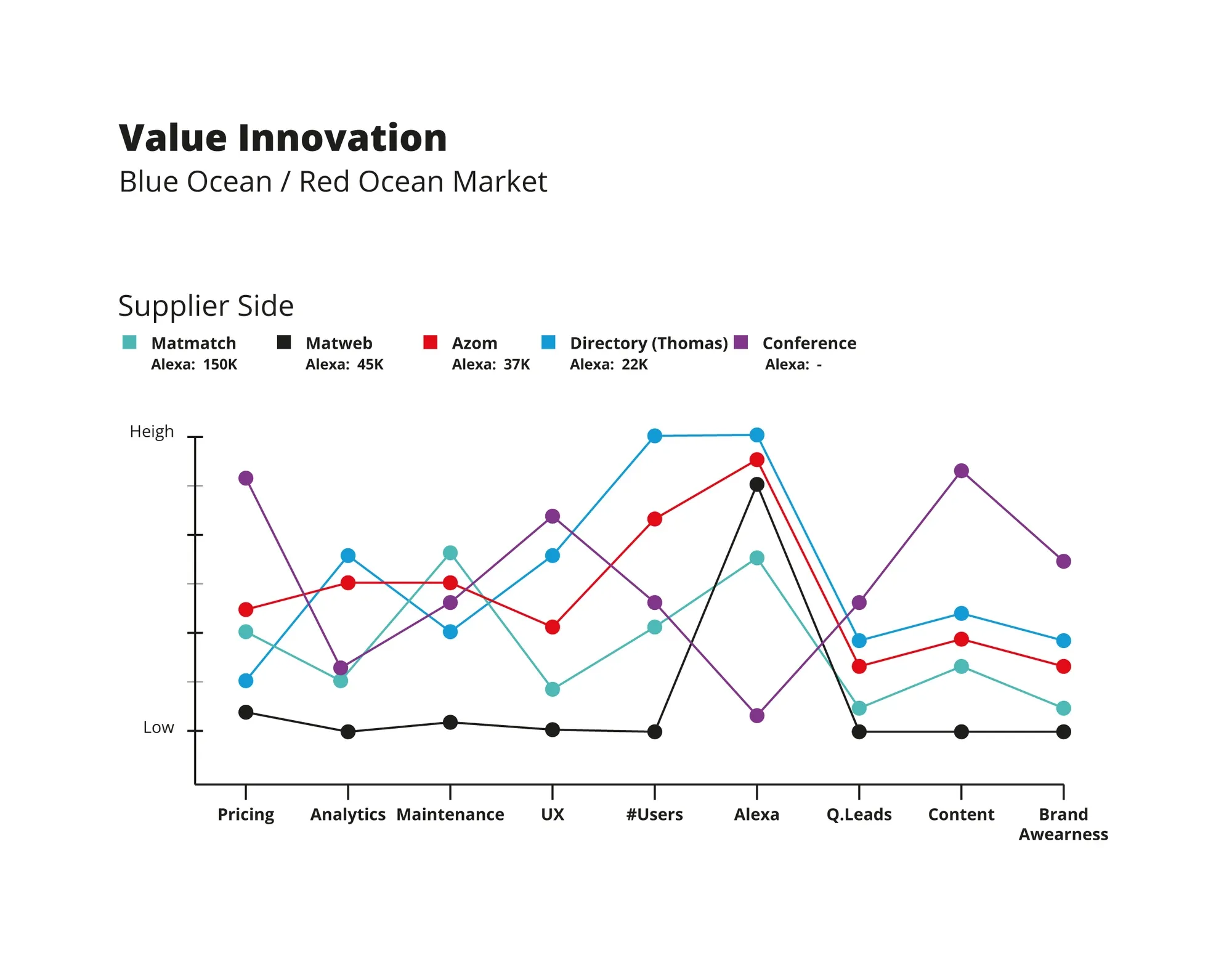
Blue Ocean strategy analysis
Identifying where Matmatch could differentiate by serving underserved needs instead of competing in crowded segments.
Service blueprints
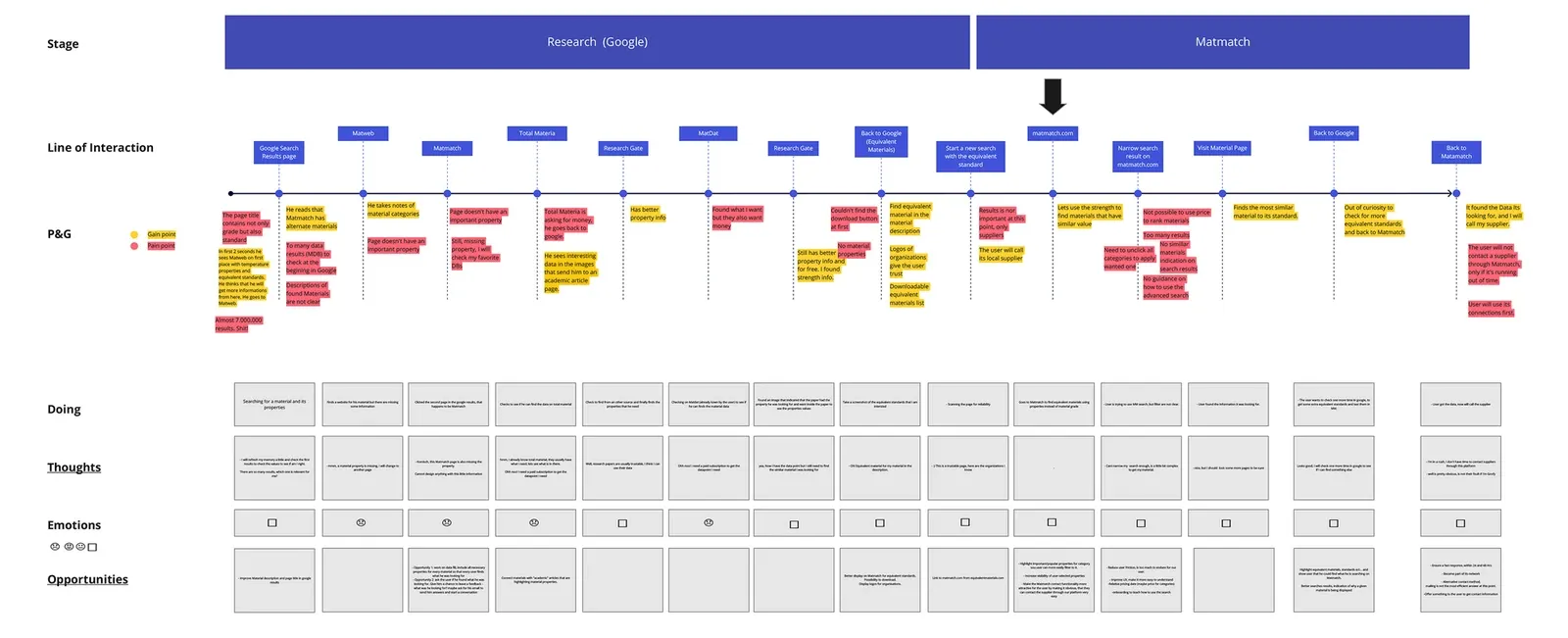
Mapping our ecosystem to reveal where the platform could create the most value across touchpoints. Leadership could finally visualize the end-to-end experience, where friction occurred, and where opportunity was being lost.
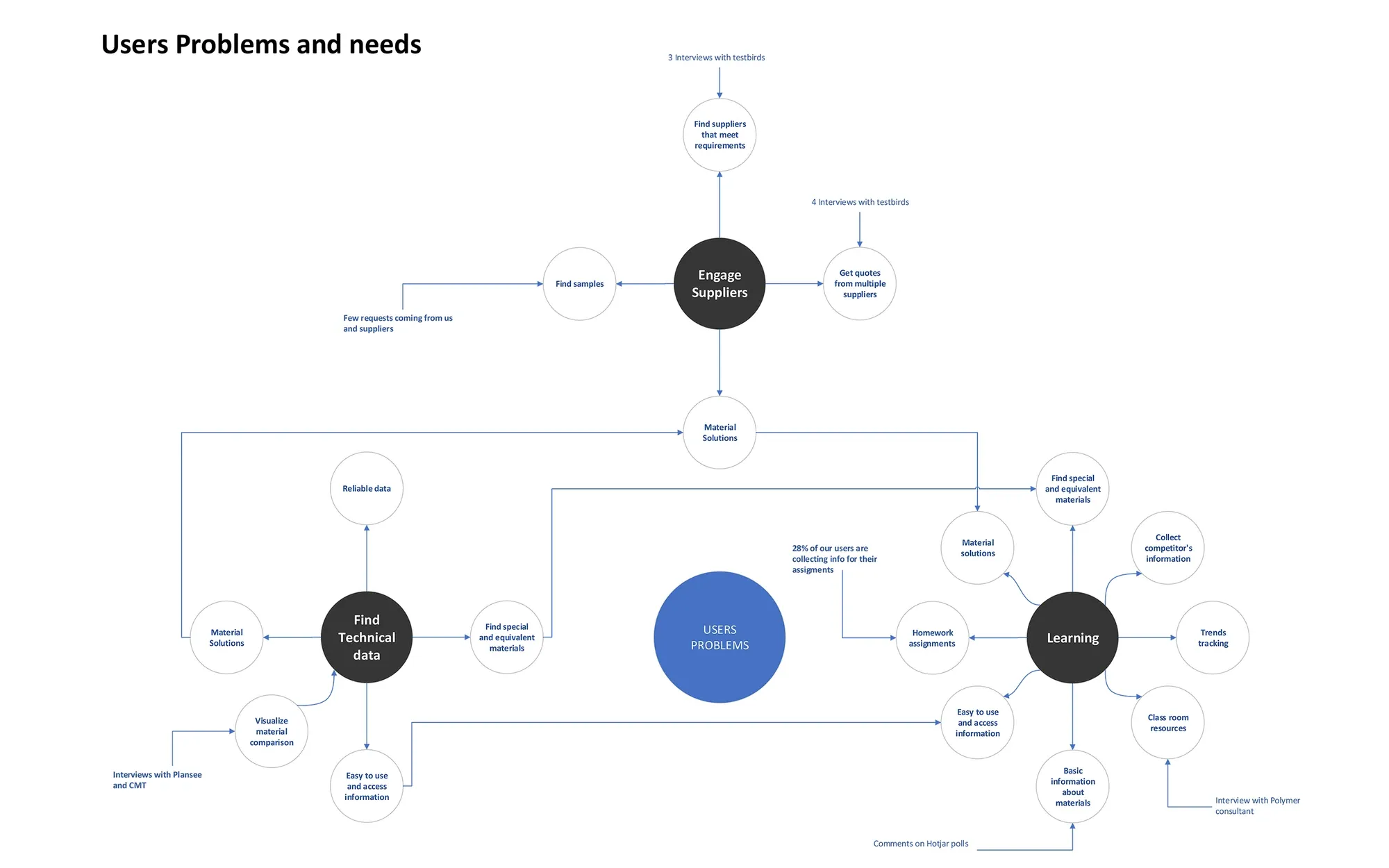
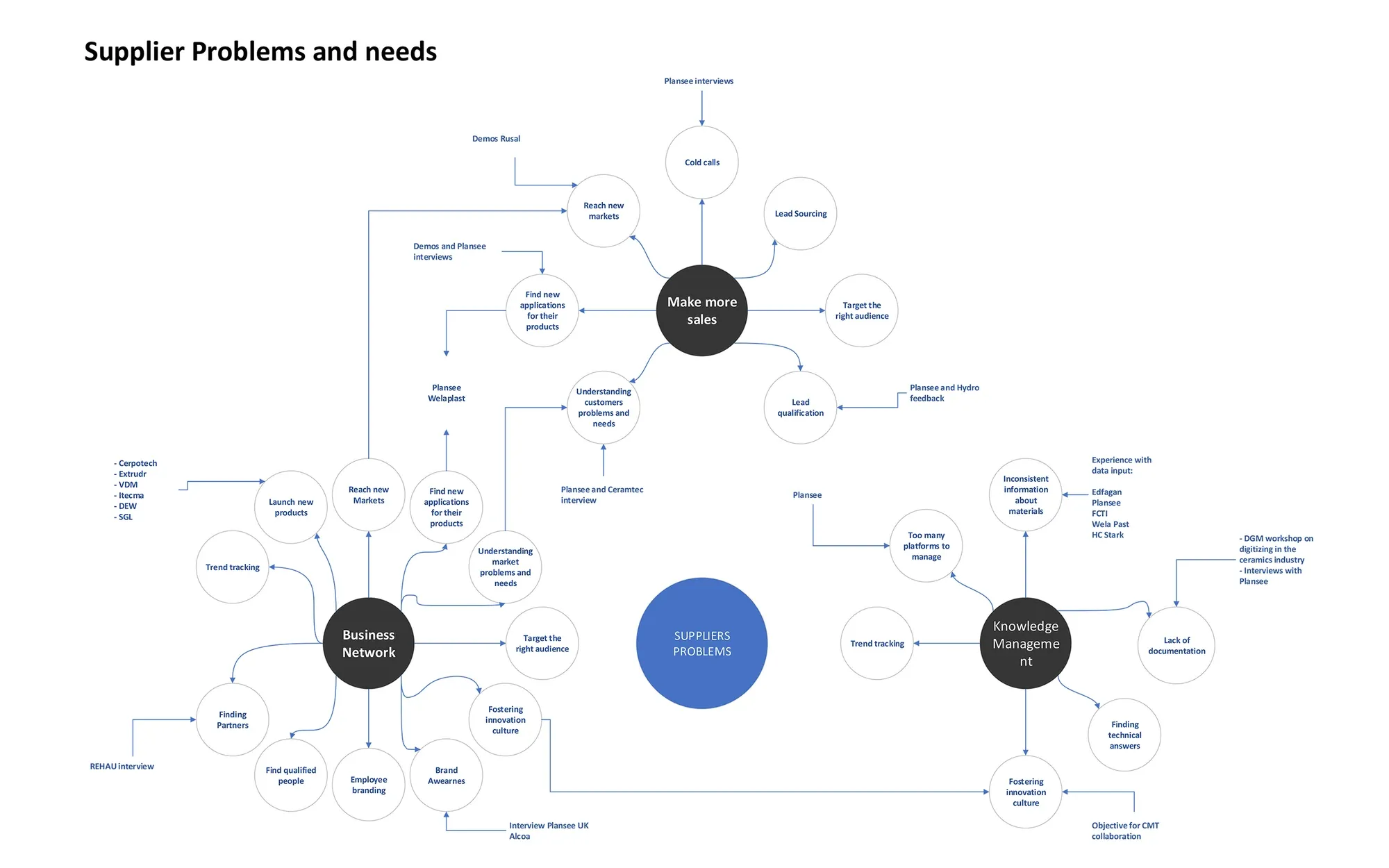
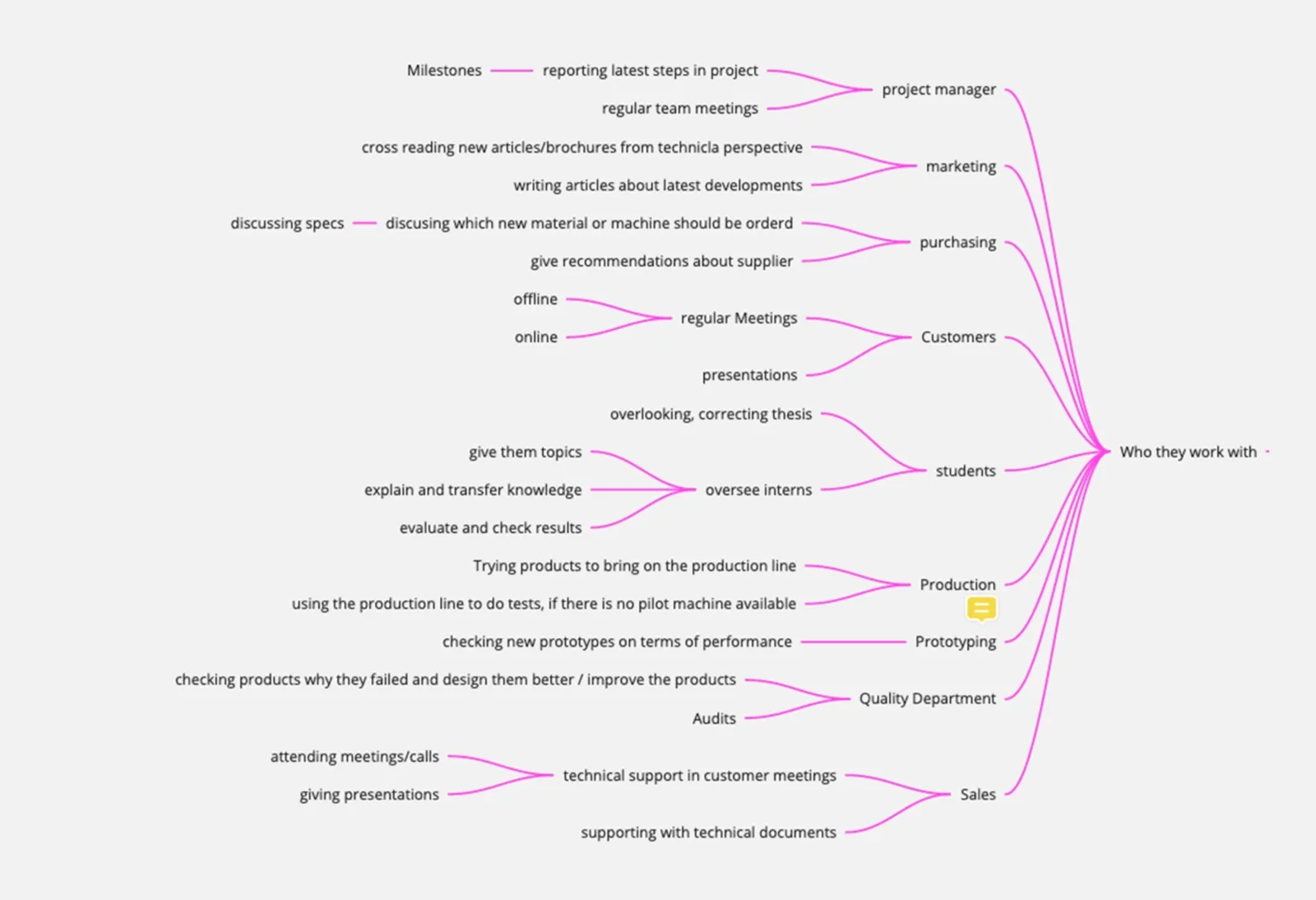
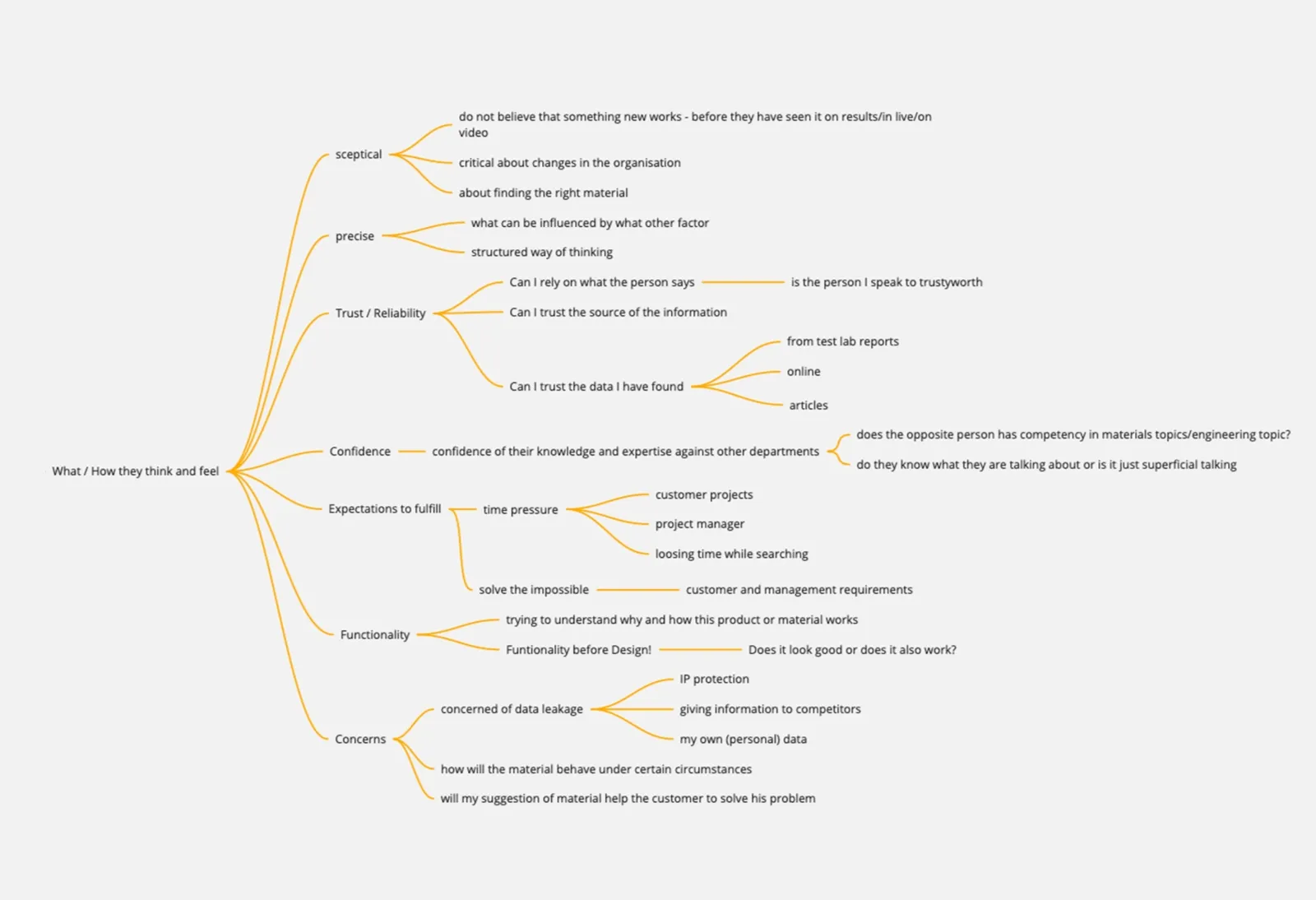
Mind Maps
Lacking the data for a traditional user journey map, we used mind mapping based on early interviews to visualize researchers' and product designers' mental models. This revealed how users naturally structure material decisions—uncovering critical friction points, non-linear search habits, and high-impact touchpoints where the platform could deliver immediate, tangible value.
4. Five Sprints to a Correct Problem
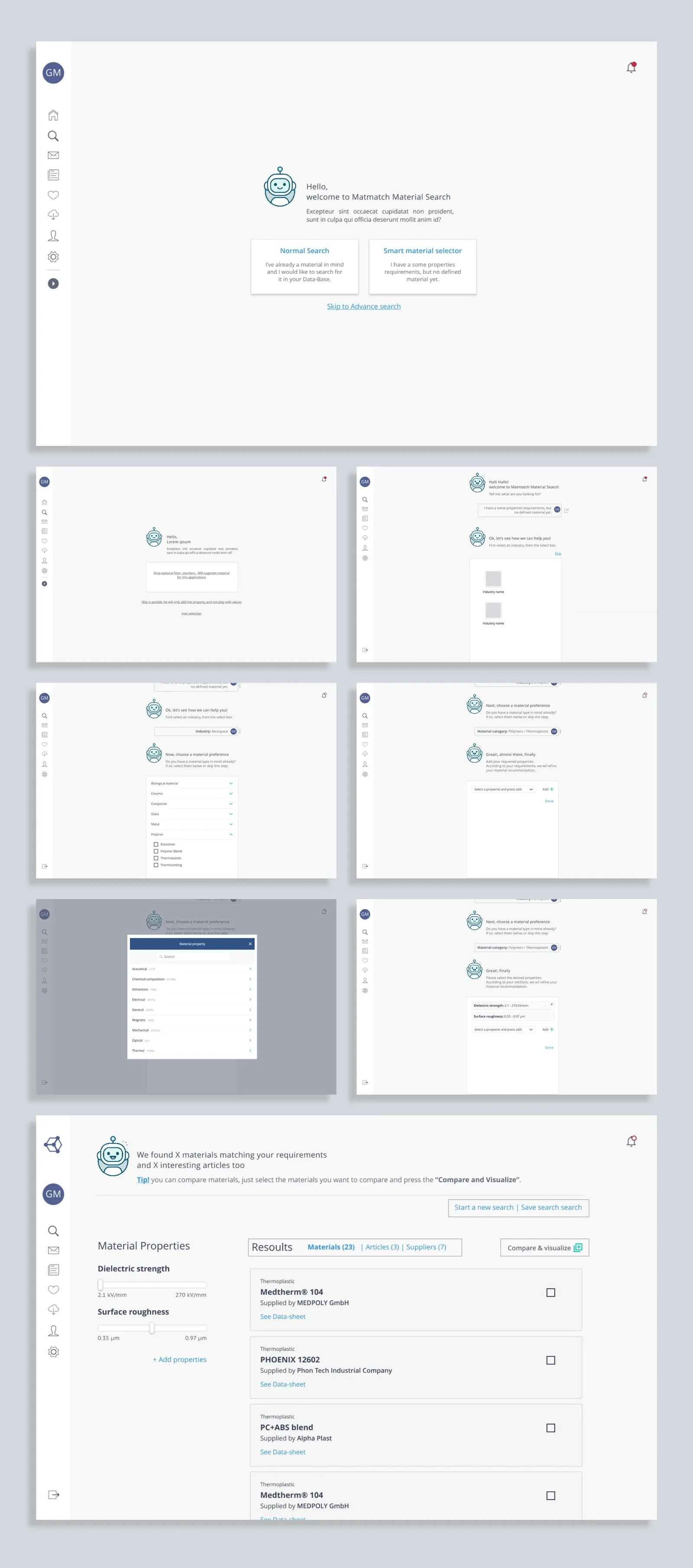
With research support secured, we tested multiple approaches using rapid prototyping—from conversational interfaces to step-by-step navigation—validating how engineers actually search for and evaluate materials.
Sprint 1
Users appreciated the cleaner design and layout, but they valued data clarity, control, and precision far more than visual novelty. Efficiency and logic—not aesthetics—were the true factors that built trust.
Sprint 2
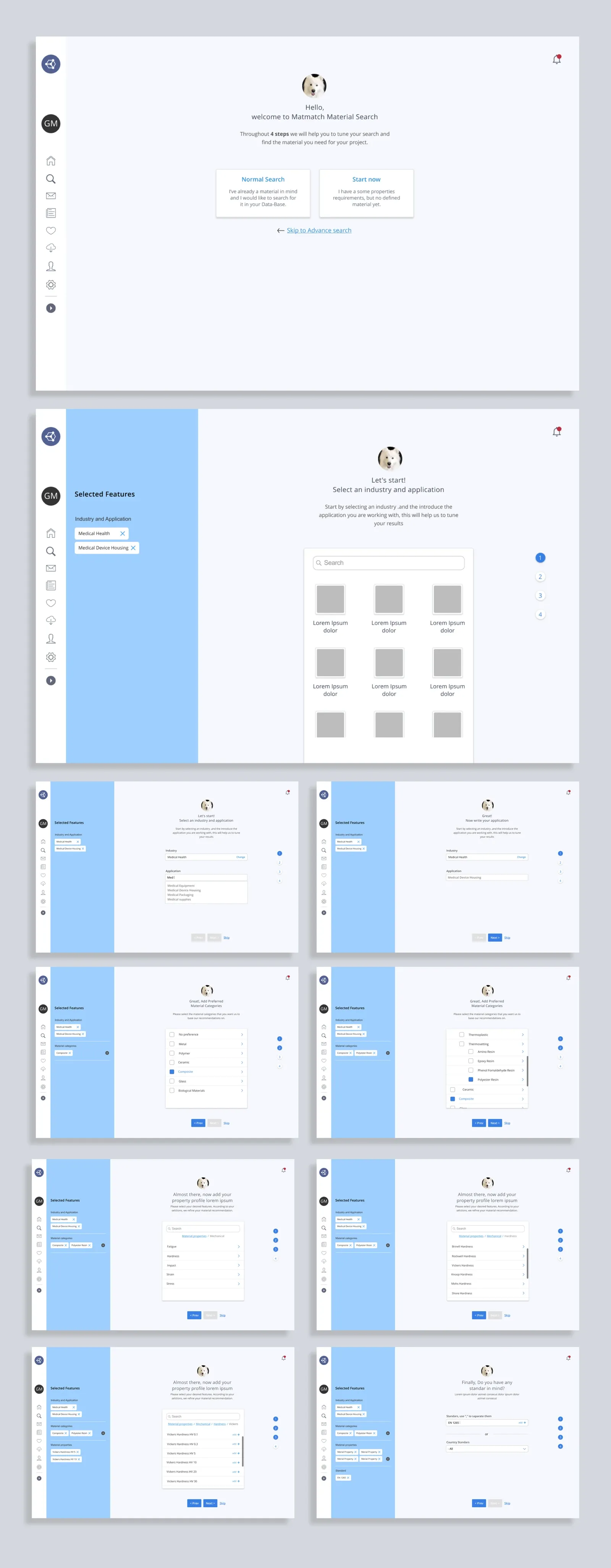
Technical constraints forced a pivot from a conversational interface to a step-based navigation model, which gave users greater control and transparency over the workflow. As prototype fidelity increased, user testing confirmed a strong preference for self-guided navigation while surfacing a critical trust gap: users repeatedly questioned result accuracy, highlighting the urgent need to validate the underlying data model and information sources.
Sprint 3
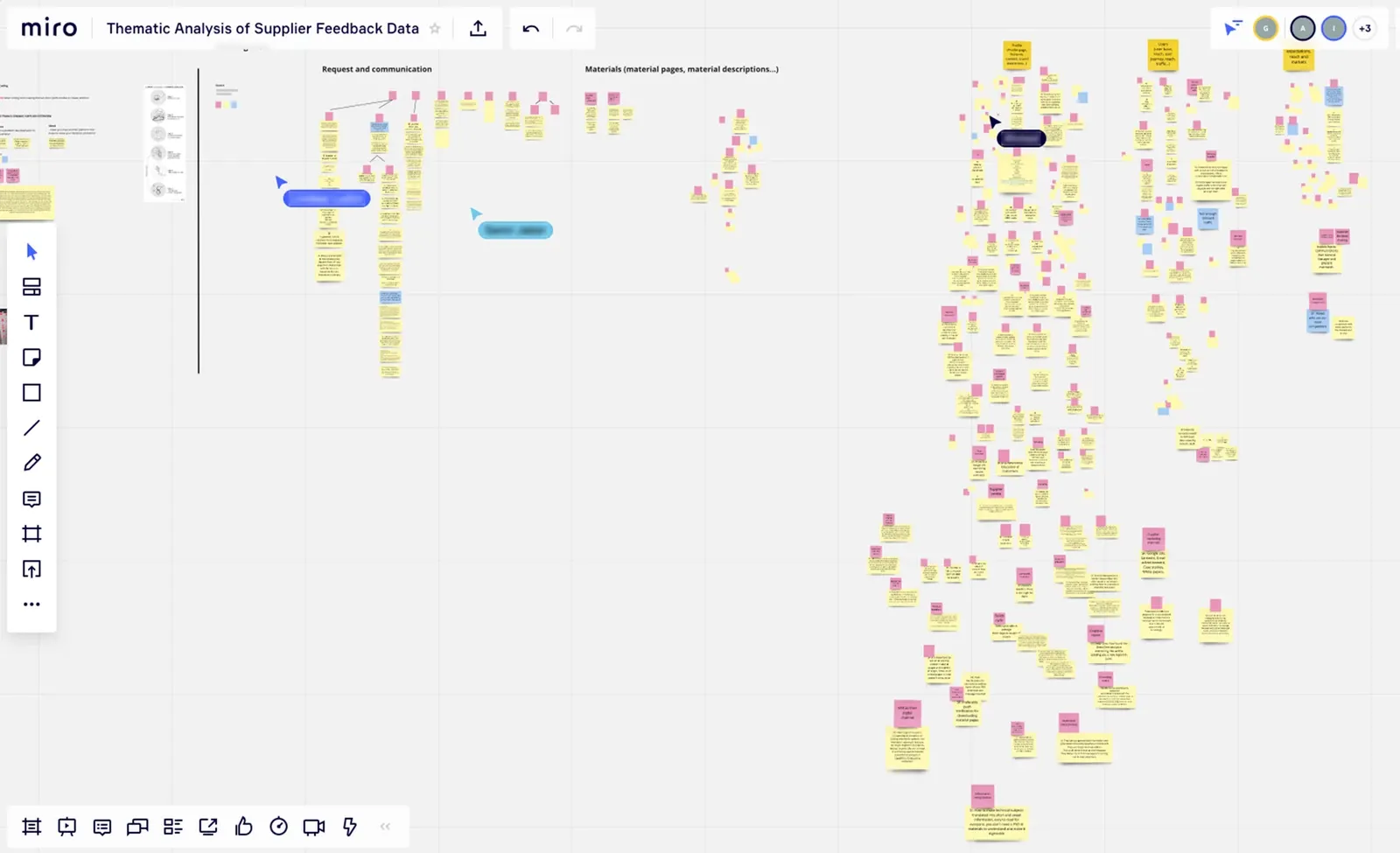
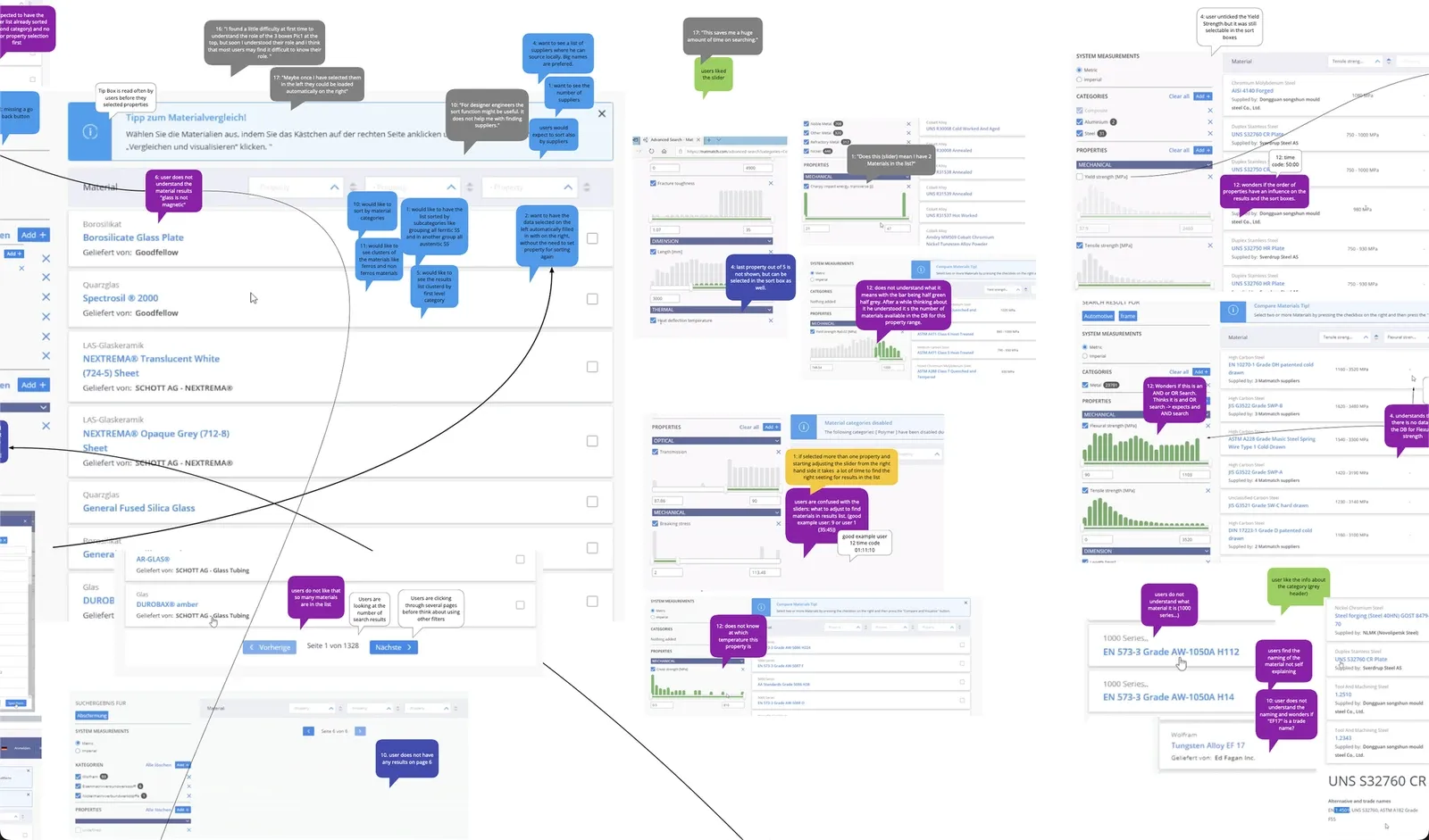
Sprint 3 focused on re-engaging with customers and cross-referencing the information held by marketing and sales teams against actual reality. We consolidated insights scattered across the sales, marketing, and customer success departments.
Key insight: The interviews and subsequent analysis of recurring themes revealed previously unnoticed patterns in user needs and behaviors, enabling the organization to align around a unified, evidence-based view of the customer.
Sprint 4
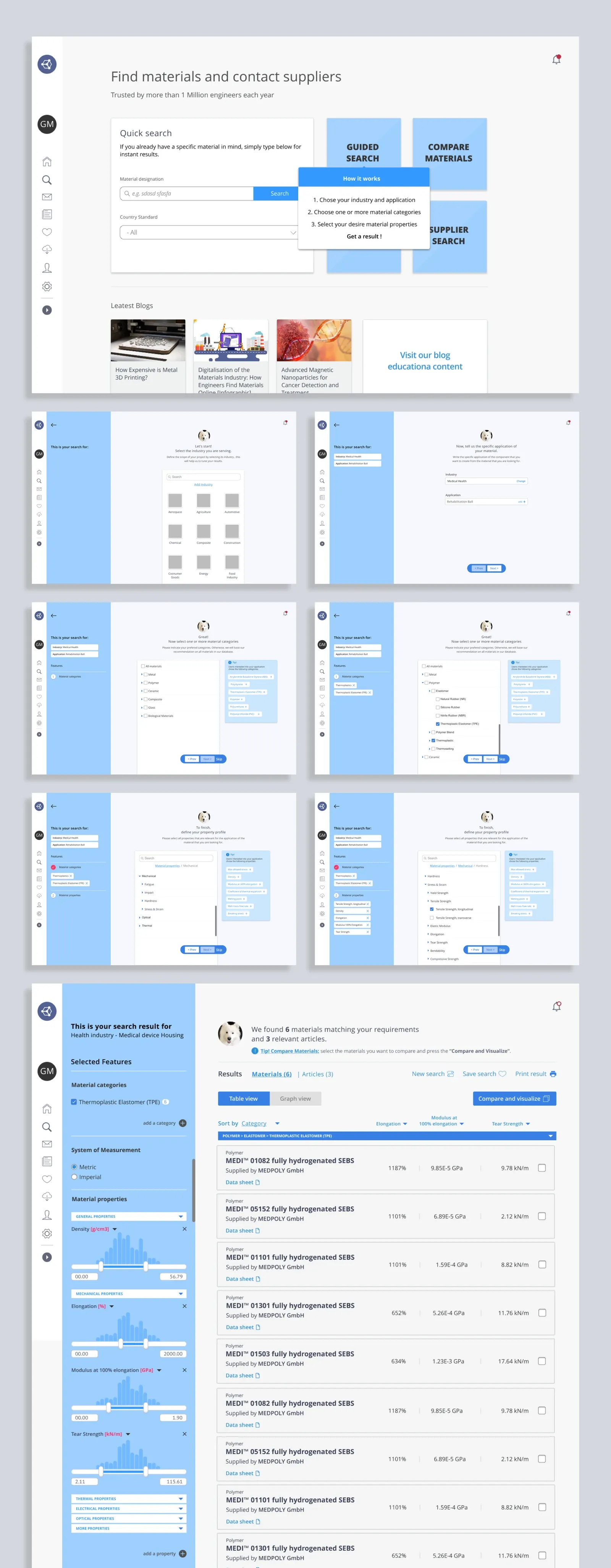
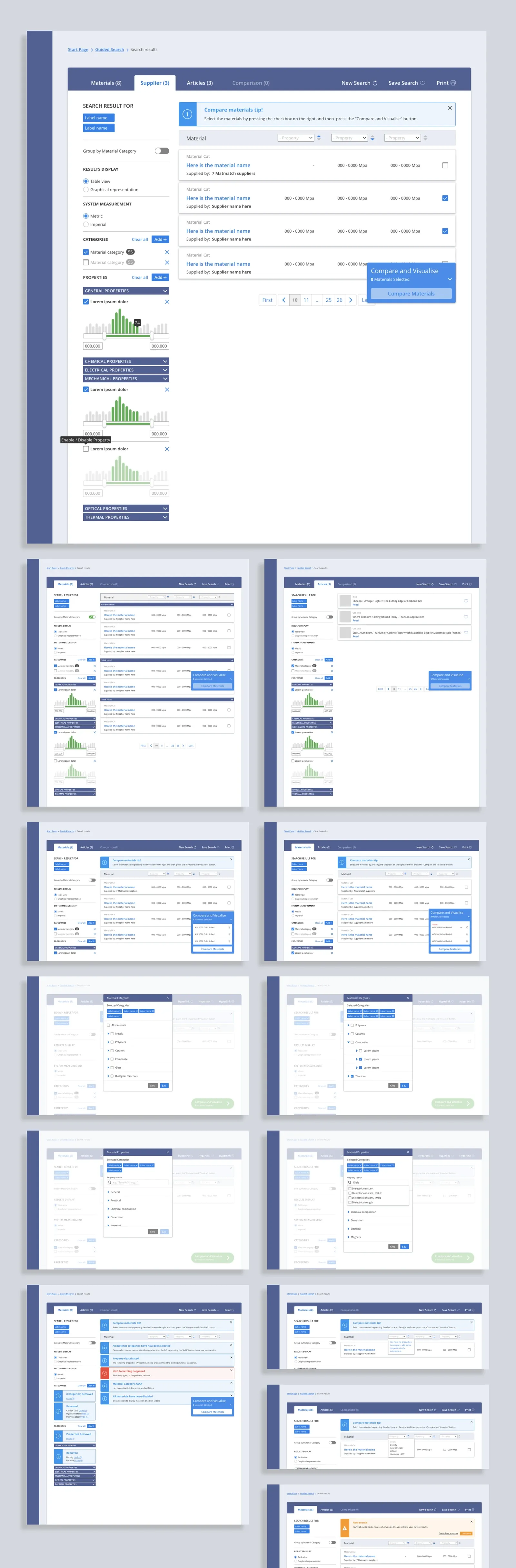
The breakthrough came when we redefined the search results page to reflect the way engineers actually think: in a structured, schematic, and efficient manner.
In practice, that meant replacing open-ended search with a guided, step-based flow — users narrow by material properties and application requirements rather than guessing at keywords — and returning results as a structured comparison view, where property values align in columns so specifications can be read across candidates at a glance instead of opening one at a time.
Client Testimony: “This is a tool I could use and share with colleagues. If you develop this, I would gladly test it and share it with more material researchers.” — User interview. Success would come not from novelty but from precision and usability.
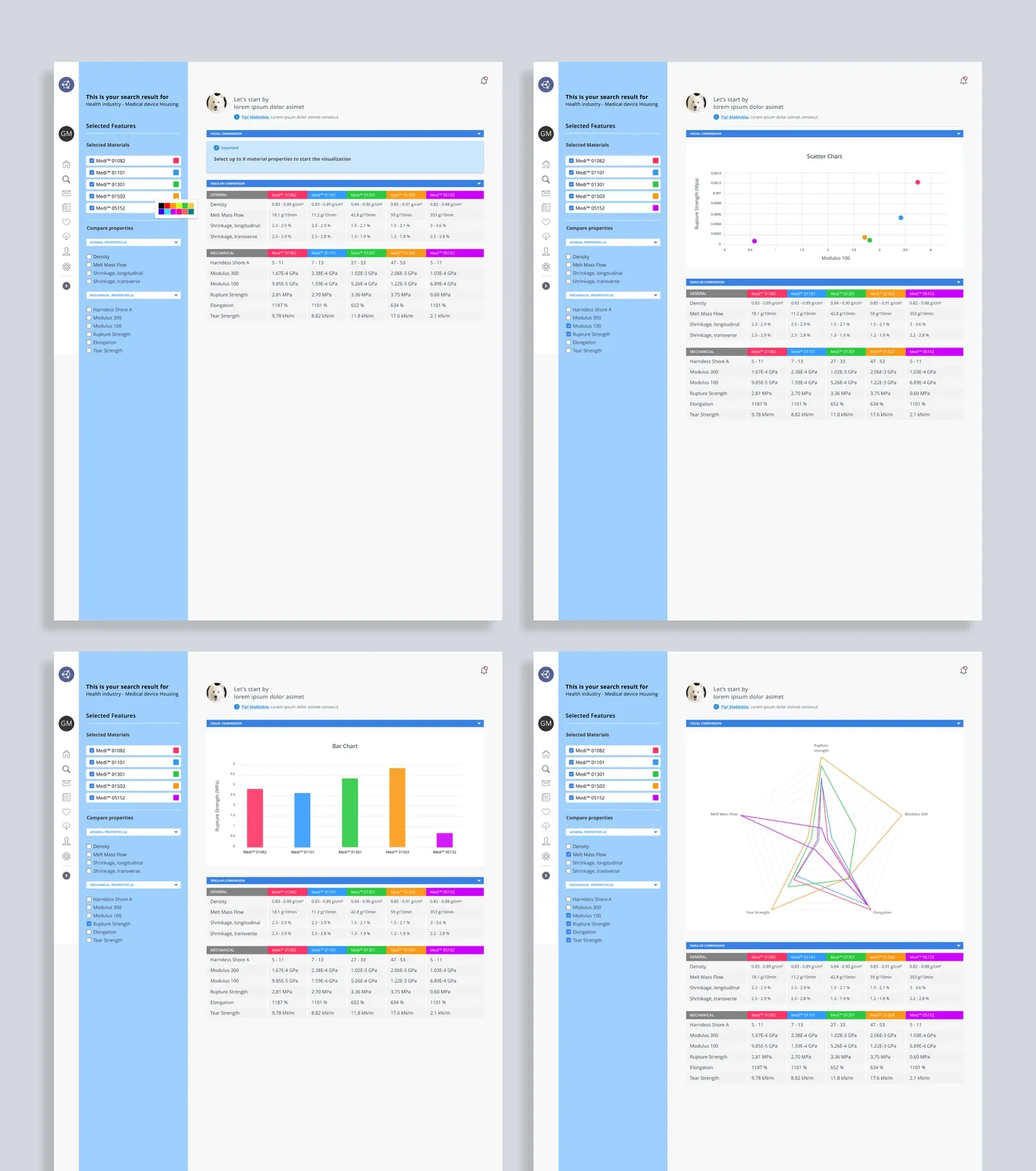
Sprint 5 - Material Comparison Feature
The final phase put to the test a capability that was underutilized yet held great potential. Interviews had revealed that engineers relied heavily on numerical data but struggled to communicate it visually to non-technical stakeholders in purchasing or management.
Client Testimony: “As an engineer, it's easy for me to understand the numerical data. However, when it comes to presenting this data or sharing it with others for decision-making — management or procurement — we need something more friendly and easy to understand, like charts.” — User interview
What the quarter produced
By the end of the quarter, our discovery and validation work had produced tangible outcomes
45+
user interviews
100+
exploratory wireframes
5
design sprints
5
usability reports
5. From UX to Product Systems: Building for Scale
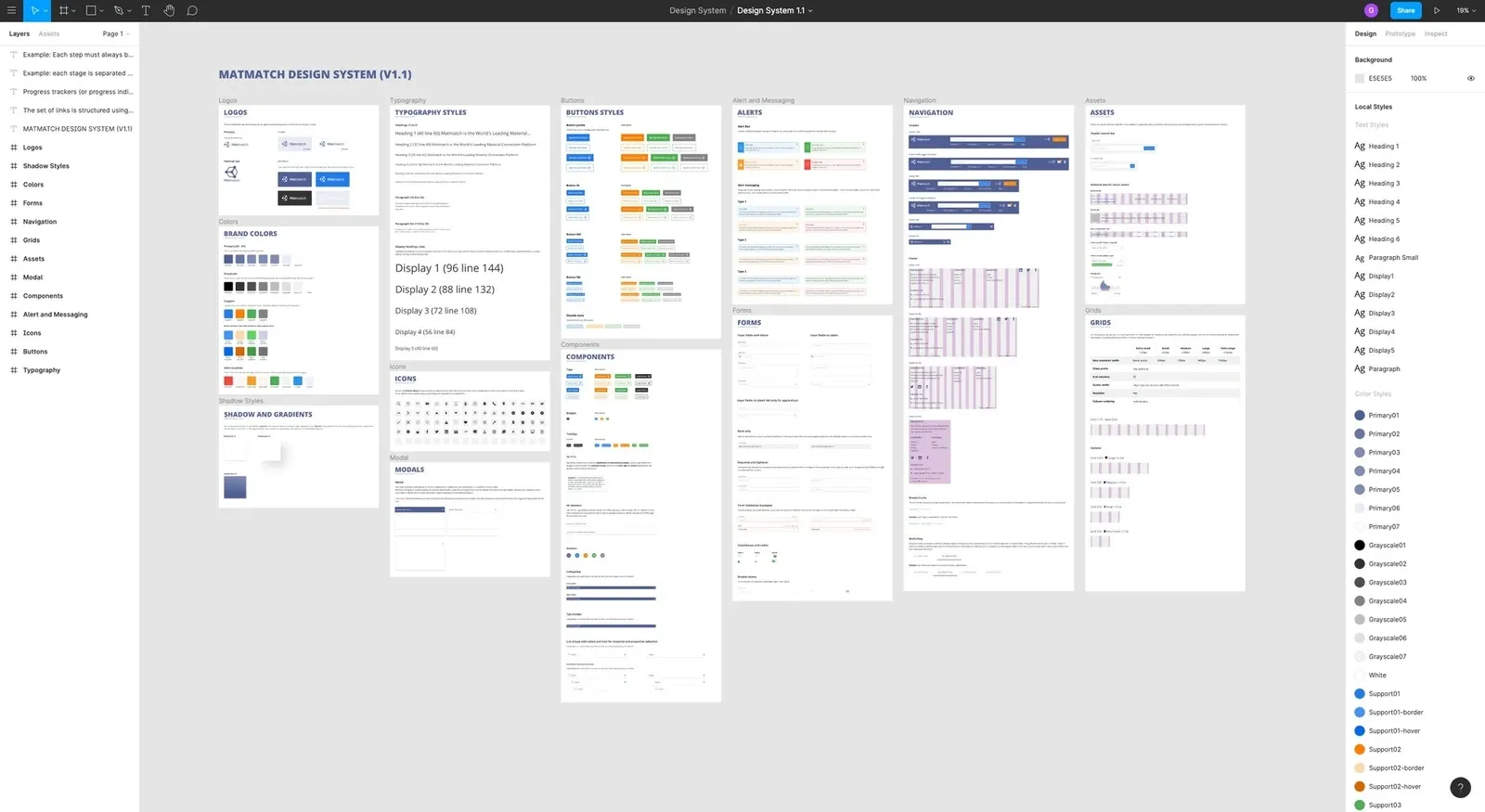
With validated concepts in hand, I shifted to systematizing design so developers could build faster and more consistently. I documented and rolled out a design system and UI guidelines tailored to the development team's capabilities, accelerating implementation and improving consistency.
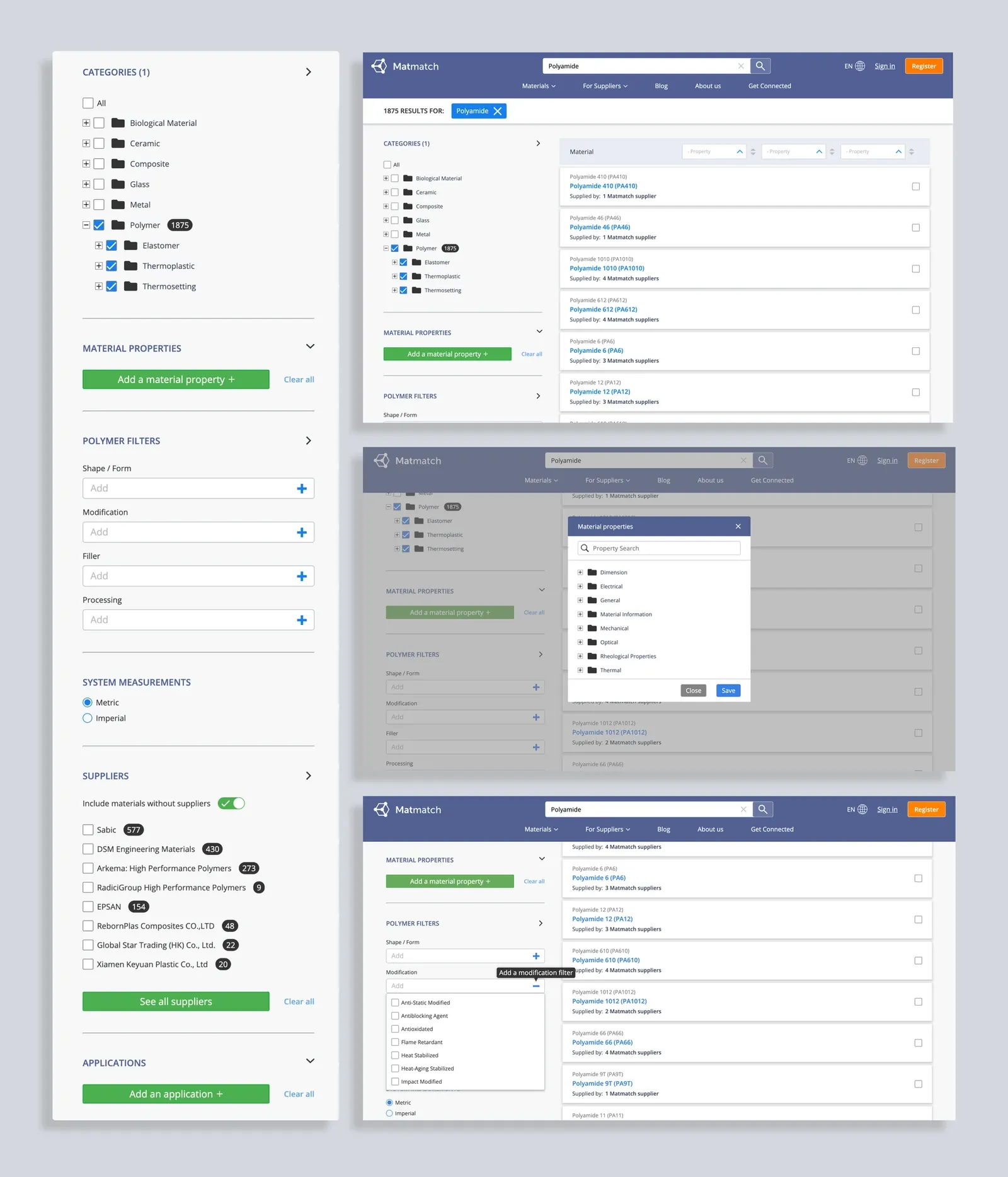
The new search engine became the centrepiece: simple, powerful, with an emphasis on clear navigation, meaningful control over results, and performance under data-heavy workflows.
Figma screens: We prioritized every feature release by impact and feasibility to deliver immediate value while laying the groundwork for long-term scalability.
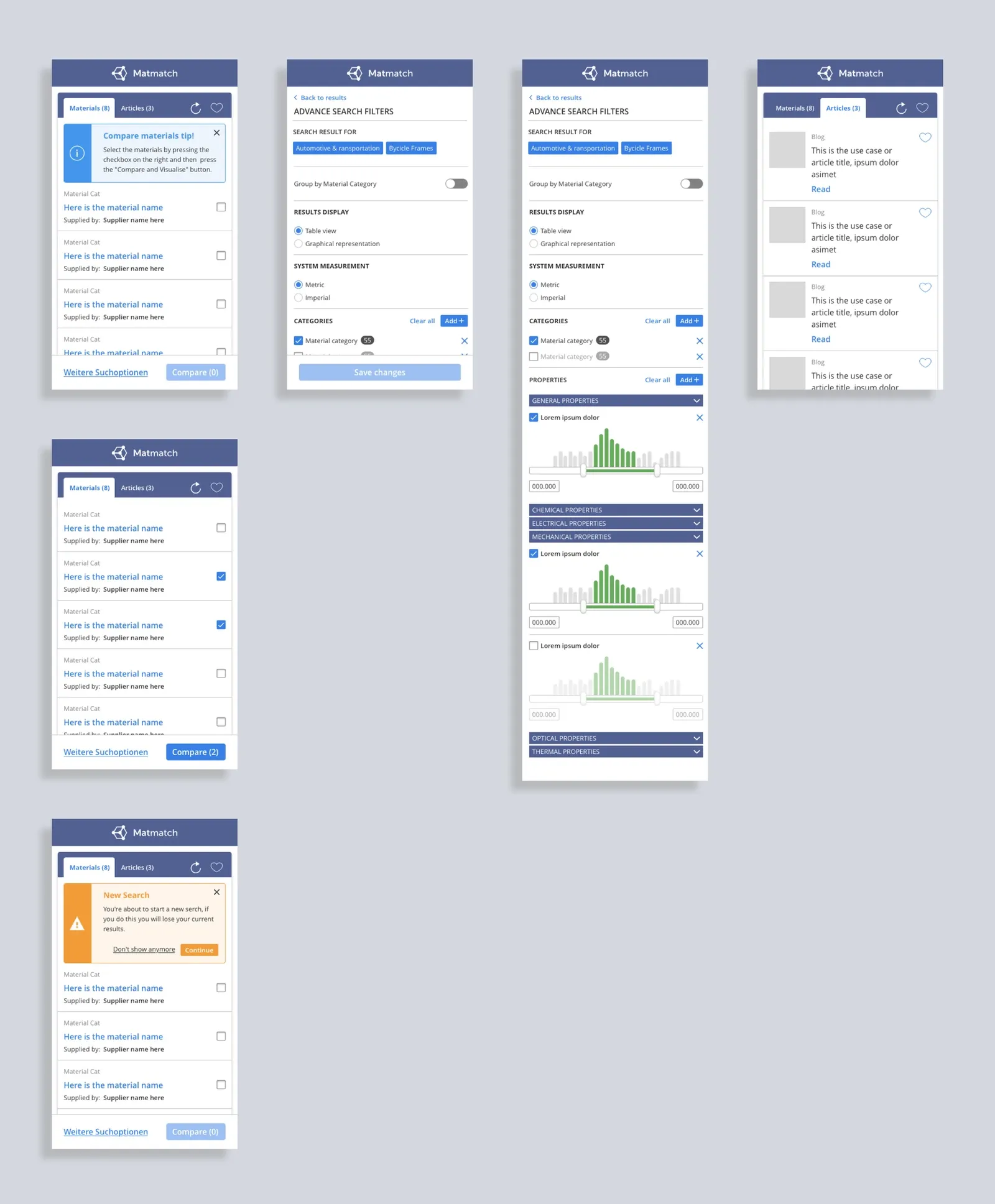
Figma screens: Our approach emphasized performance, especially given the data-heavy workflows and the platform's mobile limitations.
6. Release
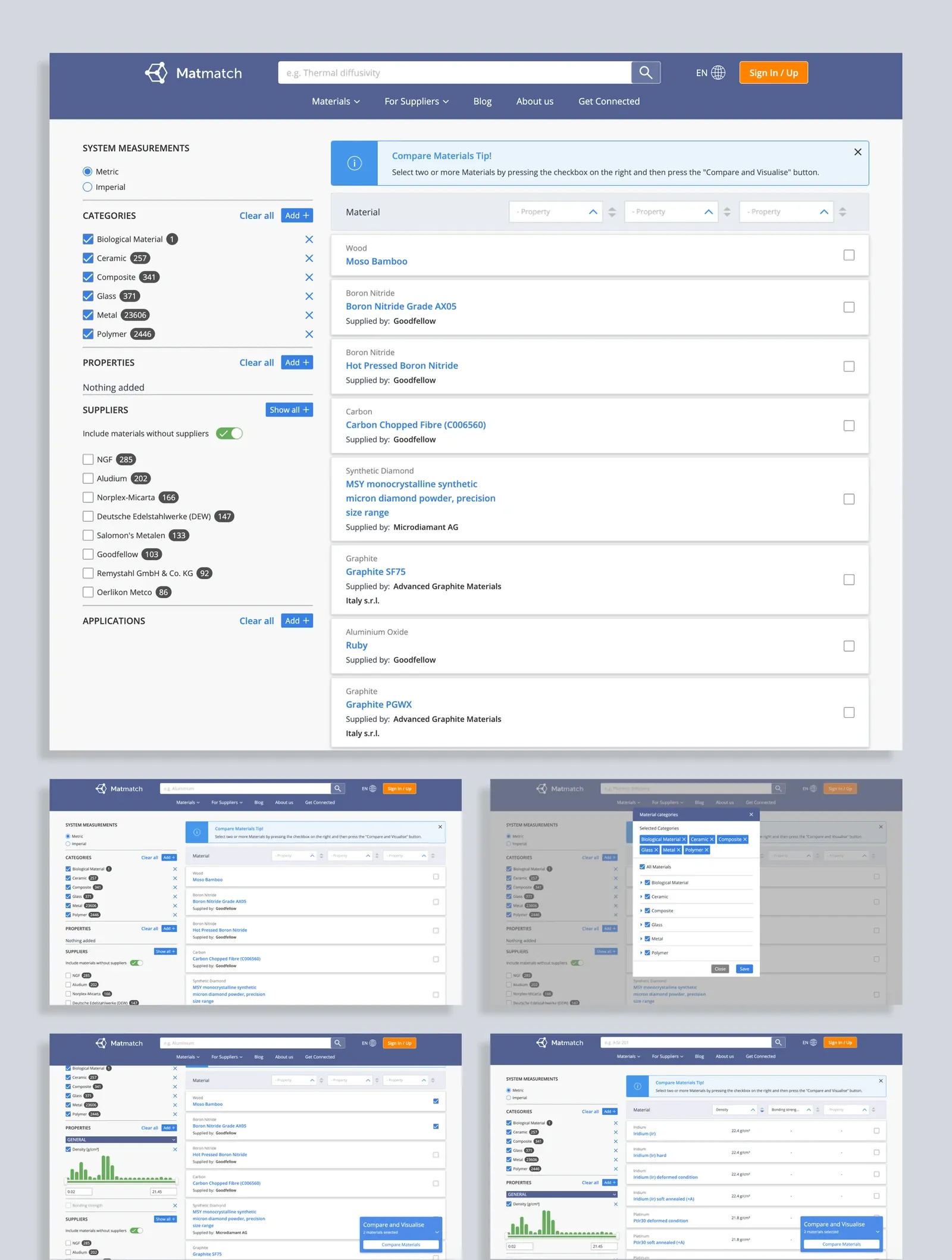
Time constraints and technical dependencies required difficult trade-offs. We delivered a more powerful search experience, but user feedback revealed where execution fell short of design intent.
Production Screens
Mistakes, Concessions, and Trade-offs
Visual clarity
Partial implementation of the new UI left the release without adequate spacing and hierarchy, making key actions harder to identify at a glance.
Change blindness
Micro-interactions and transitions were deprioritized for speed, so users couldn't always tell when actions were processing, creating a perception of latency.
Colour and accessibility
In pursuing a clean, schematic look, excessive blue tones reduced contrast for key actions, affecting visibility for colour-blind users.
Use of language
Calls to action were not descriptive enough, mismatching users' mental models.
We mapped each issue, prioritized by user impact and business value, and integrated them into a continuous improvement roadmap.
From Iteration to Growth
The improvement cycle we started after release marked the turning point. Each iteration brought new functionalities, improving usability and trust, and the evidence showed that the changes were not merely visual but materially affected how users perceived and used the product.
Introducing high-contrast accessibility controls and expanding the catalog to include polymer applications and material properties rebuilt user trust. These updates demonstrated that Matmatch was actively evolving beyond a static database into an indispensable tool for material research and supplier discovery.
7. From Data to Value: Restoring Commercial Trust
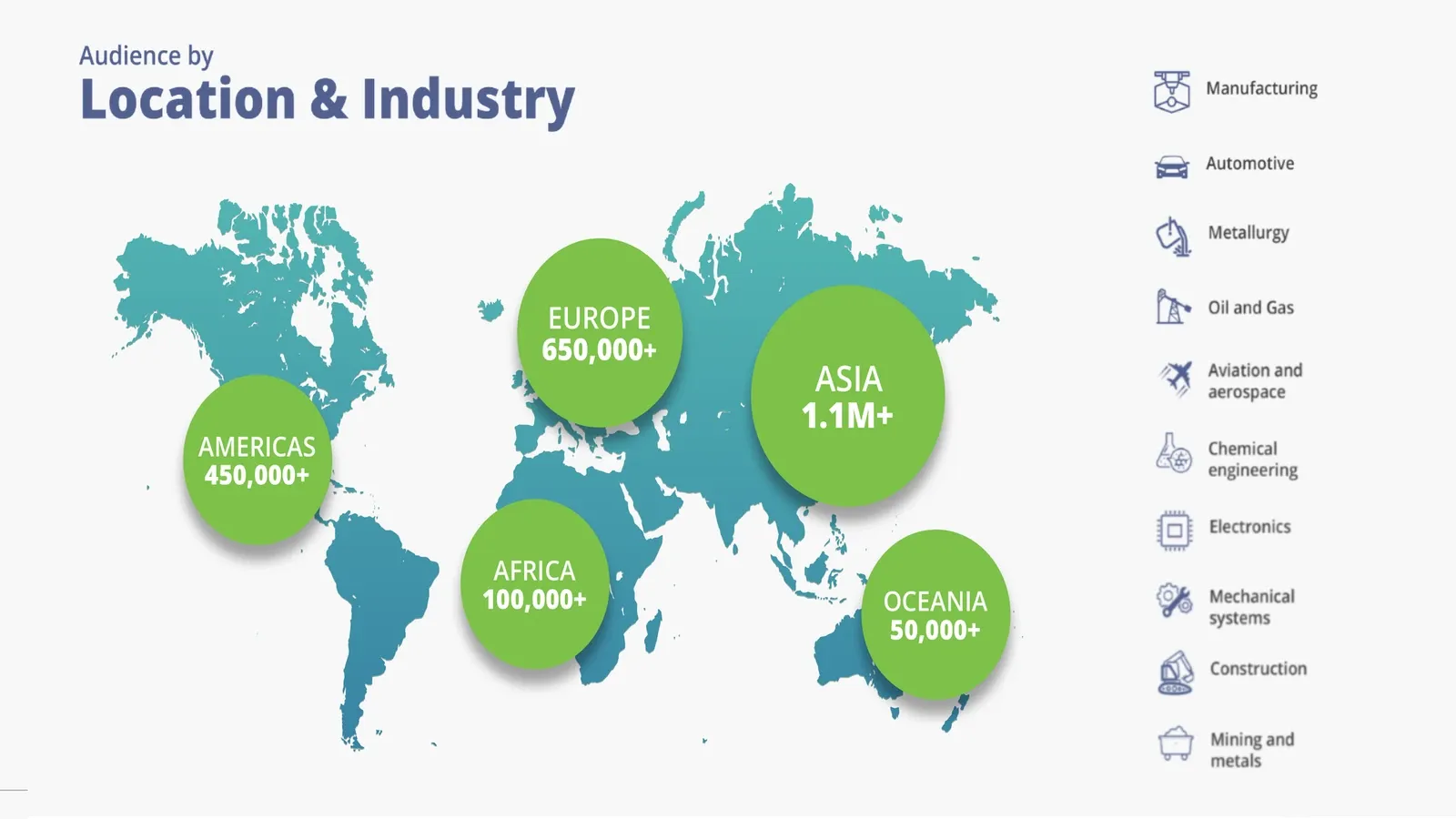
Each iteration improved usability and trust, recovering commercial confidence in the platform. Within a year, the platform reached over 10,000 daily visitors and nearly 2 million recorded sessions.
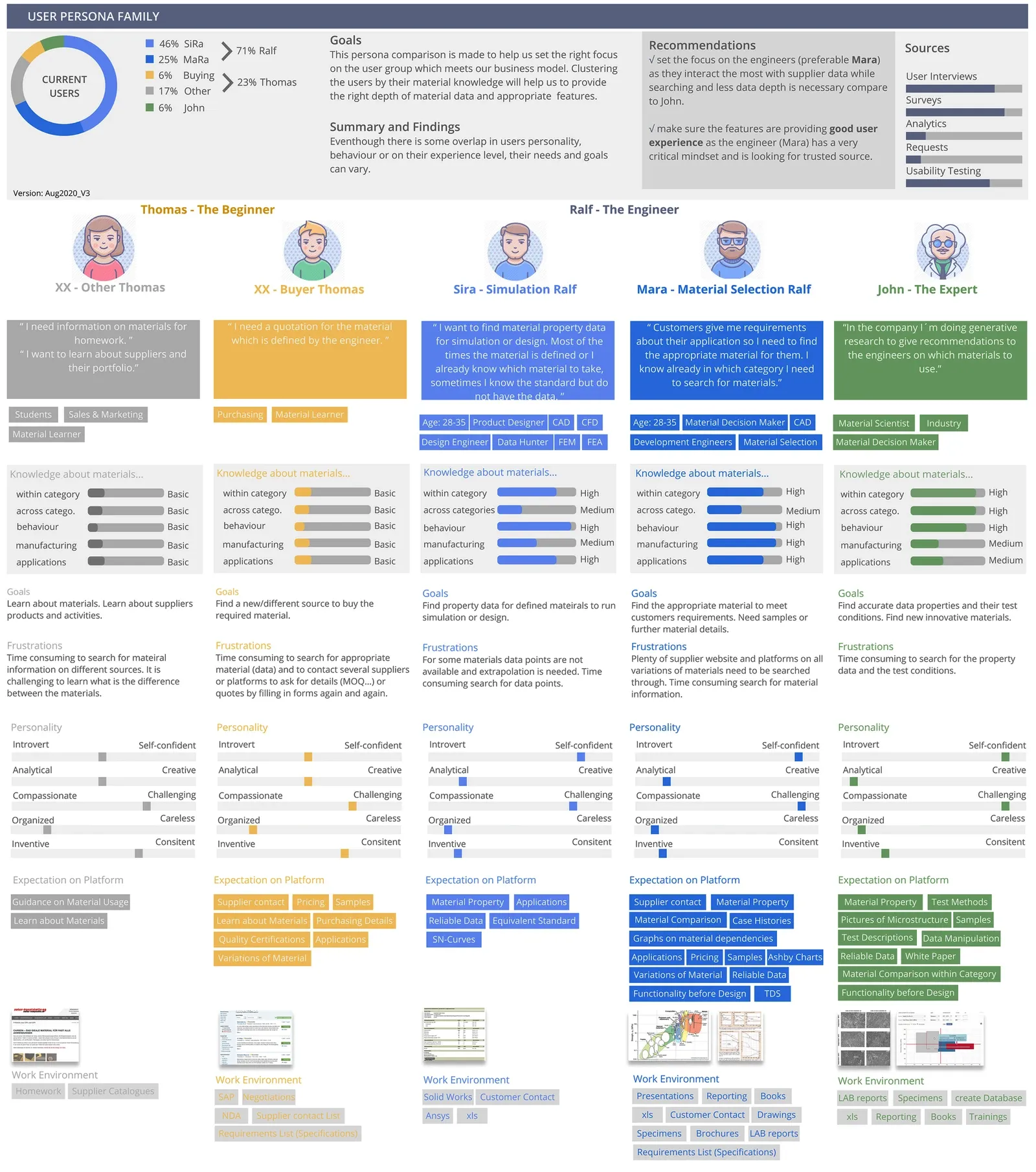
That volume finally gave us the quality and quantity of interactions needed to formalize our understanding of the audience — moving from assumptions to data-driven insights.
Empowering Suppliers with Actionable Insights
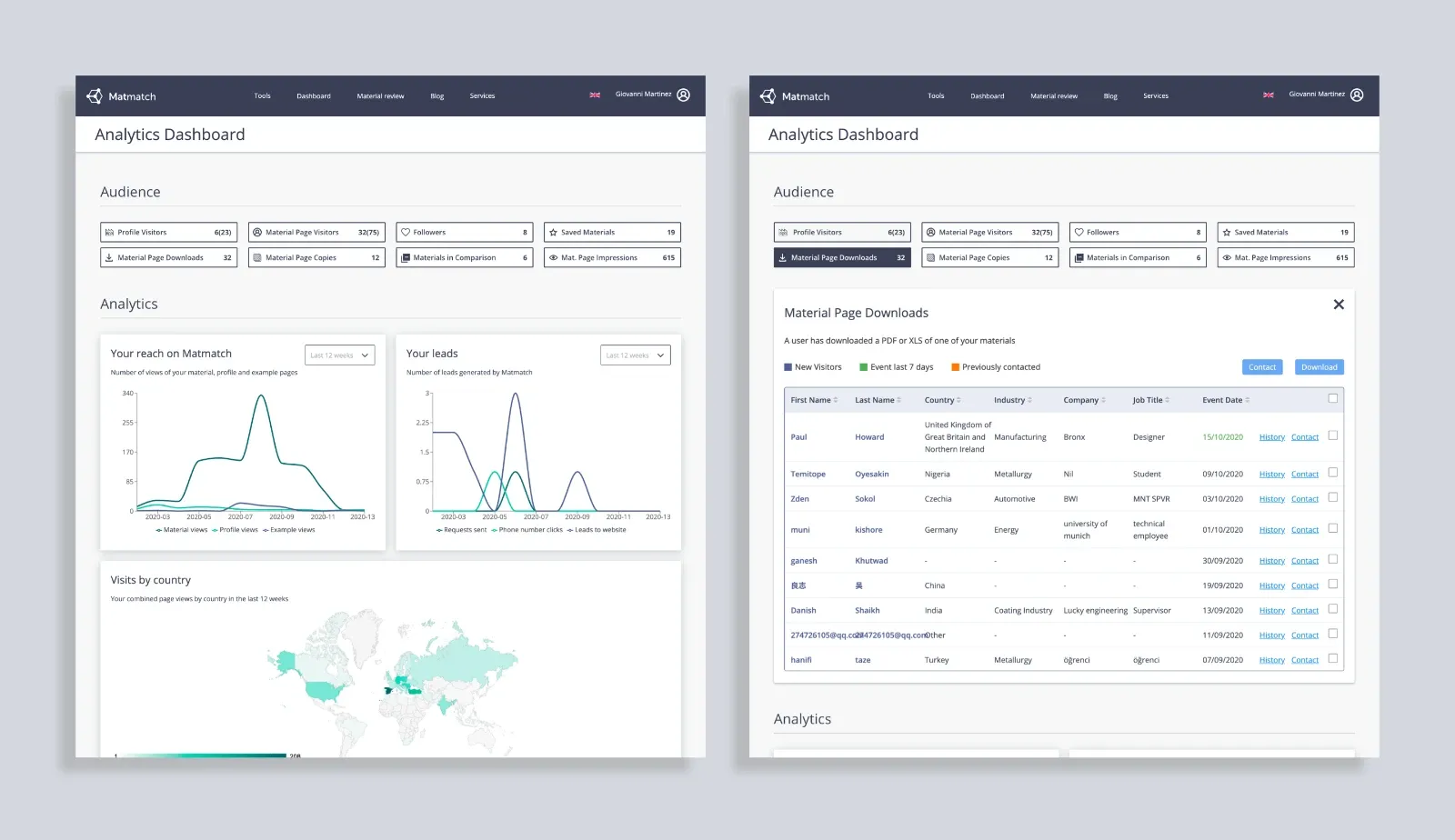
Each iteration brought Matmatch closer to its core vision: connecting engineers directly with material suppliers. As high-quality users joining the platform, we leveraged this rich activity data to create dedicated supplier-facing tools, empowering suppliers with actionable insights. As before, we started with an MVP.
Dashboard MVP: clearer information architecture and intuitive dashboard workflows restored commercial trust—equipping suppliers with actionable insights to monitor leads, analyze demand, and convert high-value buyers.
8. Business Impact & Outcomes
Key Takeaway: Being part of Matmatch's transformation taught me that building a great product is not only about usability, design systems, or validated concepts — it's about organizational readiness to adapt and evolve.
Business Impact
Objective
Solution & Execution
Impact
Value proposition realignment
Used research evidence and Blue Ocean analysis to show the platform was underserving its users, then reframed the offer around how engineers actually evaluate materials
Repositioned from search tool to decision-support platform. The new proposition addressed technical evaluation and the communication of findings to non-technical decision-makers
Organizational buy-in
Made research visible through empathy maps, service blueprints, and journey mapping; built a cross-functional team spanning data science, marketing, and sales
A user-first mentality established in a change-resistant company. Leadership could see the end-to-end experience and where value was being lost — the precondition for the pivot
De-risked product direction
Five design sprints, 30+ user interviews, 100+ exploratory wireframes; validated the new search experience against the legacy one by A/B test
Decisive evidence unlocked management commitment. Direction confirmed before development investment, avoiding a build based on assumption
Platform growth
Rebuilt the search experience around engineers' actual mental models — structured, schematic, efficient
10,000+ daily visitors and ~2M annual sessions within a year. Enough interaction volume to build personas and journey maps from data rather than assumption
Delivery efficiency
Built and documented a design system and UI guidelines matched to the development team's capabilities
Design became a strategic function. Reduced design-to-dev friction and established long-term UI consistency across the platform
Post-release rigour
Mapped every gap between tested prototype and shipped release, prioritized by user impact and business value
A continuous improvement roadmap instead of a defensive post-mortem. Execution shortfalls converted into a prioritized backlog
Learnings & Reflections
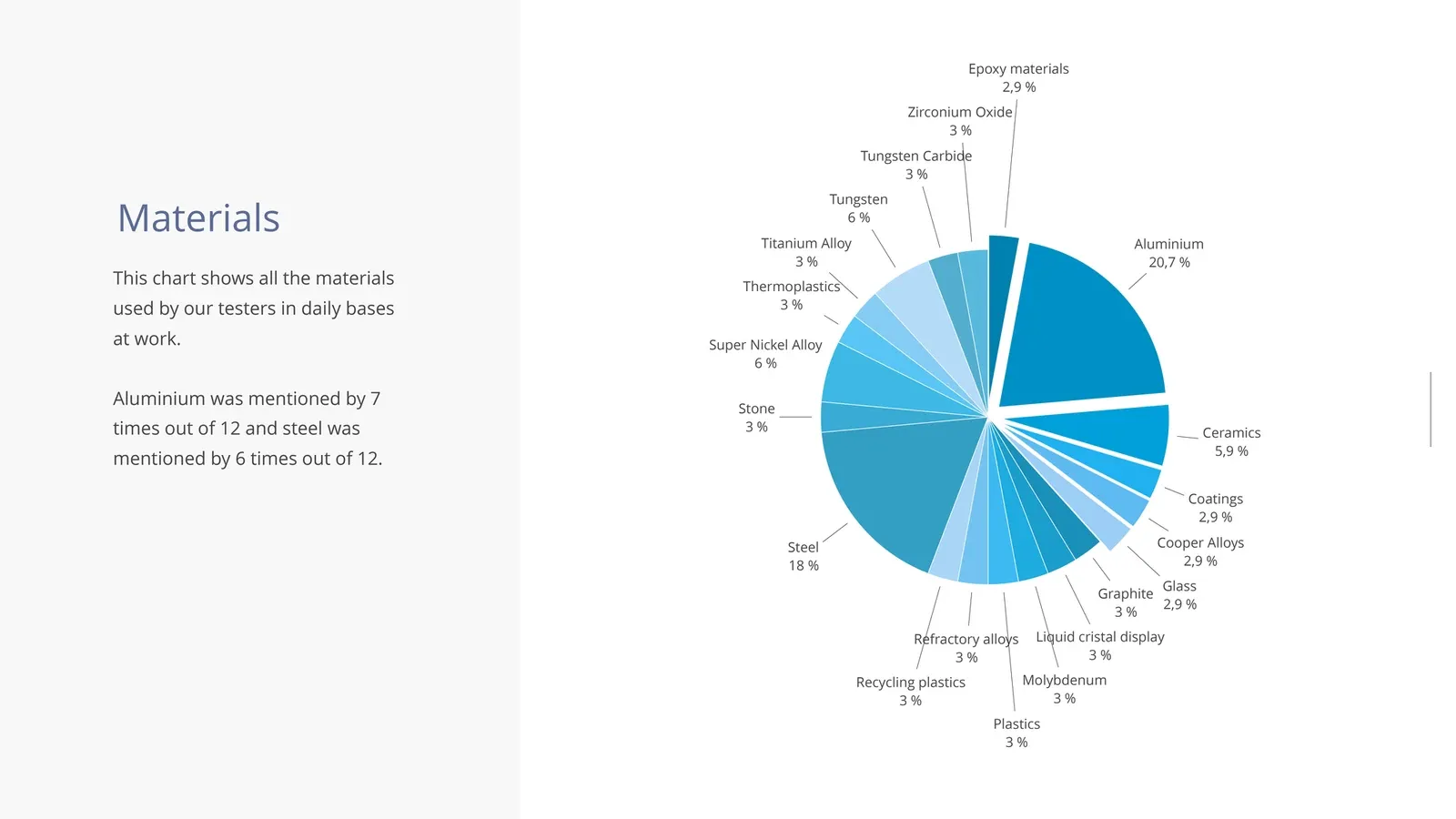
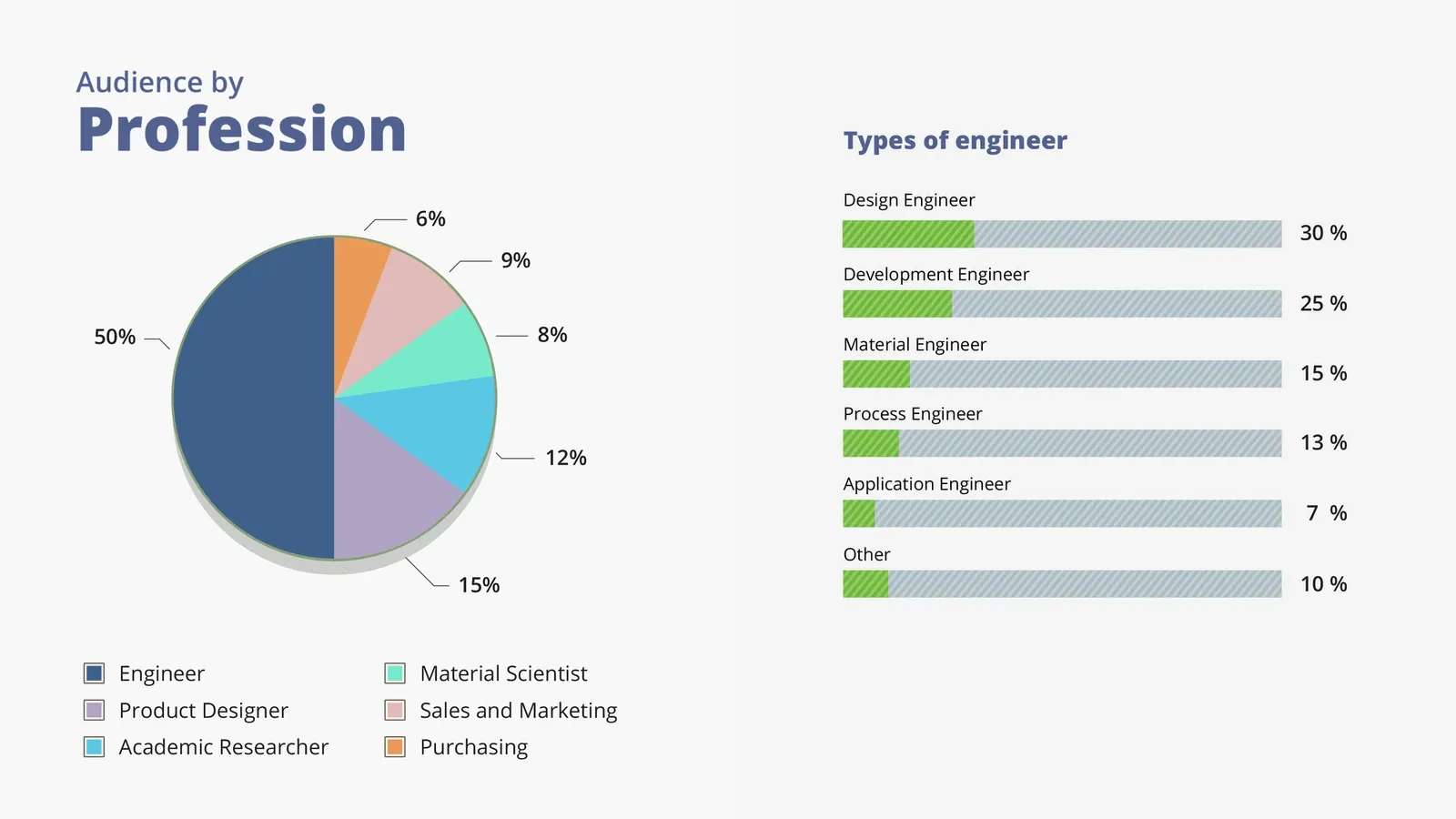
The traffic growth revealed a critical insight: a large share of the new audience were researchers and students, highly engaged but outside the original target strategy. That presented a real business opportunity — to rethink the model, expand into education and research partnerships, and leverage the data platform in new ways.
In retrospect, product success depends as much on organizational alignment and openness to change as on design or technology. At the time I wrote this use case, the materials and construction industry remains one of the most traditional and change-resistant fields, yet this experience reinforced my belief that even in rigid markets, user-centered innovation can reveal entirely new paths forward.
Matmatch may not have capitalized on that potential, but the journey strengthened my ability to bridge product strategy, design, and business goals. It was a pleasure to work with them; every involved person gave their best — an experience that continues to shape how I work with product teams today.
“A product can be researched, designed, and shipped correctly and still fall short of what it could have been.”